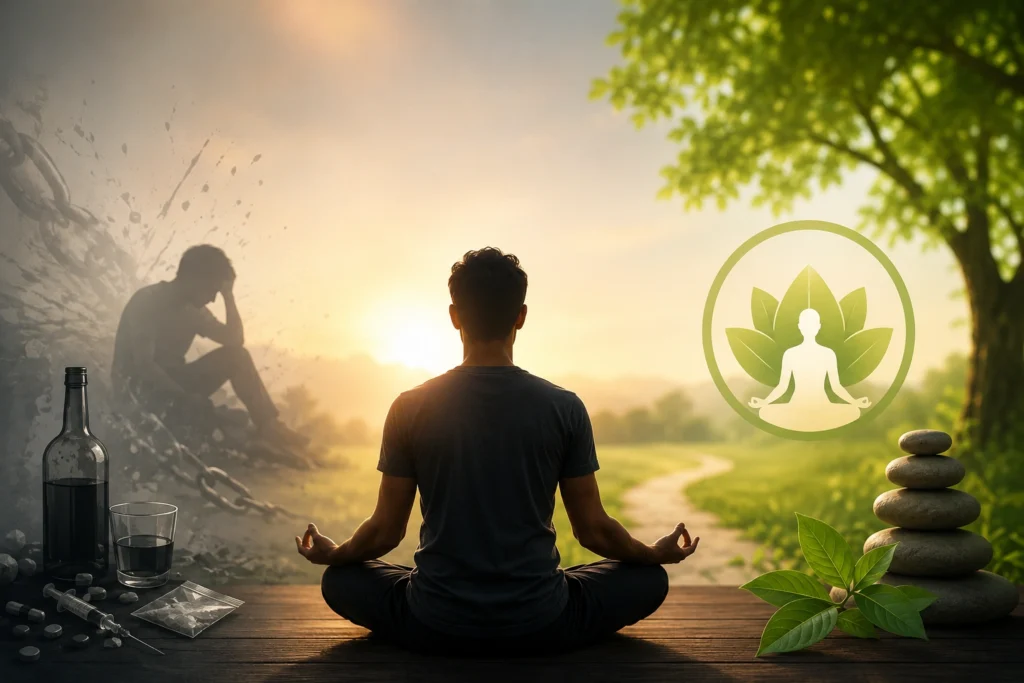
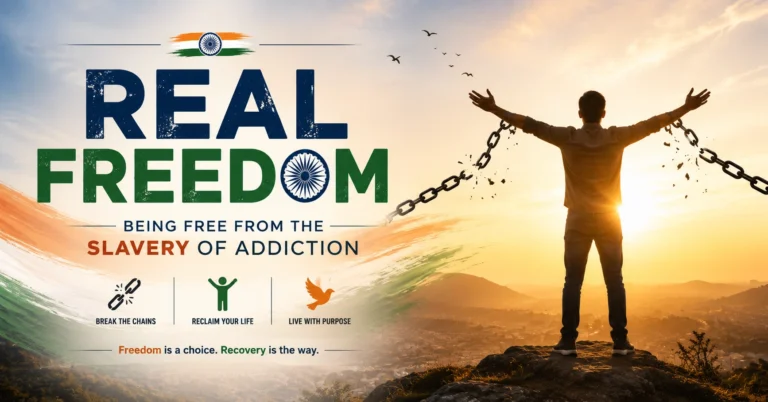
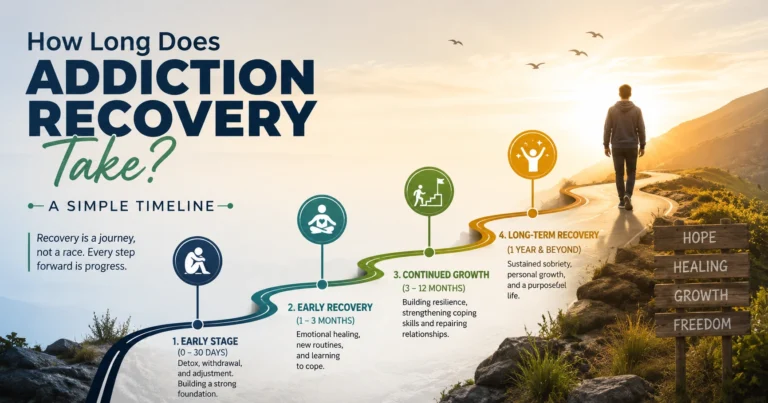
Recovery from addiction isn’t just about stopping substance use — it’s about healing a body and mind that have been under constant chemical stress. Medical treatment and counselling remain the foundation of any recovery program, but a growing body of research shows that yoga and meditation, when added alongside these treatments, can meaningfully speed up healing and lower the chances of relapse.
At Hamara Sankalp Nasha Mukti Kendra, we’ve seen this firsthand — patients who combine structured yoga and meditation sessions with their treatment plan often show calmer withdrawal, better sleep, and stronger emotional control within the first few weeks.
Here’s a closer look at why that happens.
Addiction rewires the body’s stress response, keeping it stuck in a state of high alert. Gentle yoga postures, combined with slow, controlled breathing (pranayama), activate the parasympathetic nervous system — the body’s natural “rest and repair” mode. This helps lower cortisol (the stress hormone), ease muscle tension left over from withdrawal, and steady a racing heartbeat or restless mind.
Even simple daily practice — 30 to 45 minutes of gentle postures and breathing — has been linked in clinical studies to noticeably eased withdrawal symptoms, better sleep, and reduced anxiety compared to standard treatment alone.
One of the hardest parts of recovery is managing cravings and triggers without reacting impulsively. Mindfulness meditation trains exactly this skill. Regular practice has been shown to increase activity in brain regions responsible for mood regulation and impulse control, while reducing the intensity of cravings over time.Research reviews covering thousands of participants have found that after a few weeks of consistent meditation, many people in recovery report a measurable drop in the urge to use, along with better ability to notice a craving, sit with it, and let it pass — rather than acting on it.
Substance use hijacks the brain’s dopamine system, the same circuitry responsible for natural feelings of motivation and pleasure. Over time, the brain stops producing these chemicals on its own, which is part of why early recovery can feel flat, low, or unmotivated.
Yoga and meditation offer a natural, gradual way to restore this balance. The physical movement, breath control, and relaxation involved in yoga are known to release endorphins and support healthier dopamine regulation — helping the brain slowly relearn how to feel good without a substance.
Many people struggling with addiction are also carrying unresolved stress, trauma, or anxiety. Yoga and meditation create a safe, non-judgmental space to process these emotions rather than suppress them. This is particularly valuable for patients with co-occurring conditions like PTSD or chronic anxiety, where studies have shown yoga-based therapy can support both emotional healing and reduced substance intake.
This emotional processing is often what separates short-term abstinence from lasting recovery.
Addiction often erodes routine and self-respect. A daily yoga and meditation practice rebuilds both. Showing up on the mat every morning — even when it’s hard — teaches discipline. Completing a session builds a small, repeatable sense of accomplishment. Over weeks and months, this steadily restores confidence, self-worth, and a feeling of control over one’s own life — all of which are protective against relapse.
At Hamara Sankalp, yoga and meditation are never a replacement for medical detox, counselling, or family therapy — they work alongside these, not instead of them. A typical day might include:
Patients don’t need any prior experience. Sessions are kept simple, supportive, and adapted to each person’s physical condition — especially important during early withdrawal, when the body is still healing.
Yoga and meditation won’t cure addiction on their own — but as part of a complete treatment program, they give the body and mind real tools to heal faster: calmer withdrawal, fewer relapse triggers, restored emotional balance, and a stronger foundation for lifelong sobriety.
If you or a loved one is looking for a de-addiction program that treats the whole person — body, mind, and spirit — reach out to Hamara Sankalp Nasha Mukti Kendra to learn more about our holistic recovery approach.
]This article is for informational purposes and does not replace professional medical advice. Anyone considering starting a recovery program should consult a qualified doctor or de-addiction specialist.
best nasha mukti kendra haldwani गर्व से WordPress द्वारा संचालित