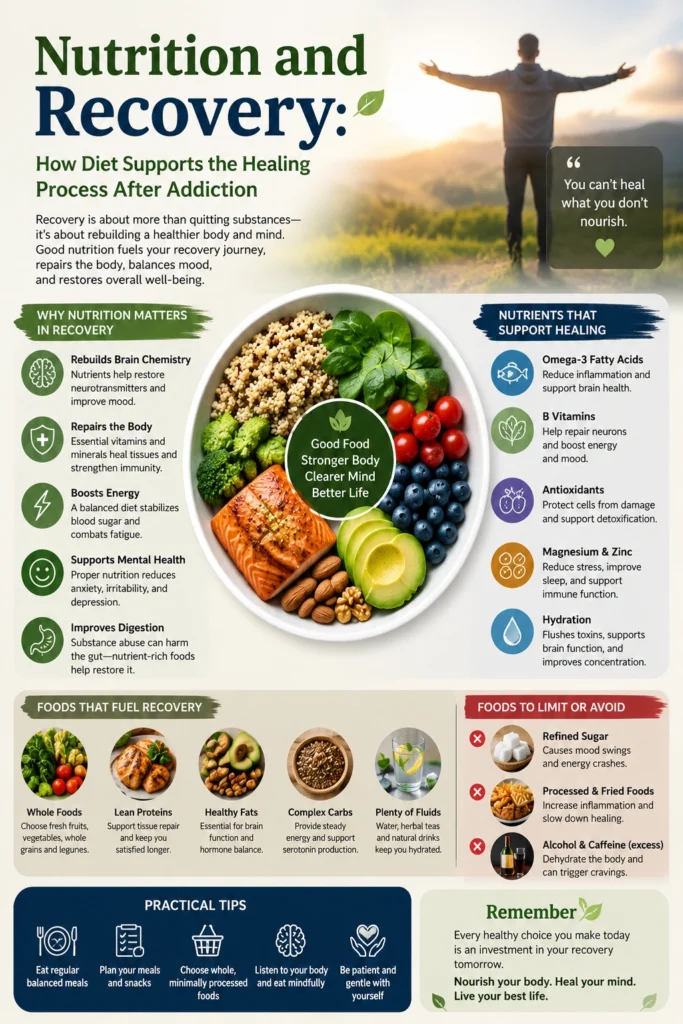
Nutrition and Recovery: How Diet Supports the Healing Process After Addiction
When people think about addiction recovery, the first things that usually come to mind are counselling, detox, and willpower. Diet rarely makes the list — yet it plays a far bigger role in healing than most people realize. Substance abuse takes a serious toll on the body, often leaving behind nutritional deficiencies, a damaged digestive system, and an imbalance in the very brain chemicals that influence mood and cravings. Rebuilding physical health through proper nutrition isn't a side detail in recovery — it's one of the foundations on which lasting sobriety is built.
Why Addiction Damages the Body's Nutritional Balance
Prolonged substance use disrupts the body in ways that go far beyond the obvious. Alcohol and drugs interfere with the absorption of essential nutrients, damage the lining of the stomach and intestines, and place enormous strain on the liver and kidneys — organs already responsible for filtering toxins from the body.
Many individuals in active addiction also neglect regular meals altogether. Appetite suppression, irregular sleep cycles, and a general disinterest in self-care mean that by the time someone enters treatment, their body is often running on empty. Common deficiencies include low levels of B vitamins, magnesium, zinc, and vitamin D — all of which affect energy, immune function, and mental clarity.