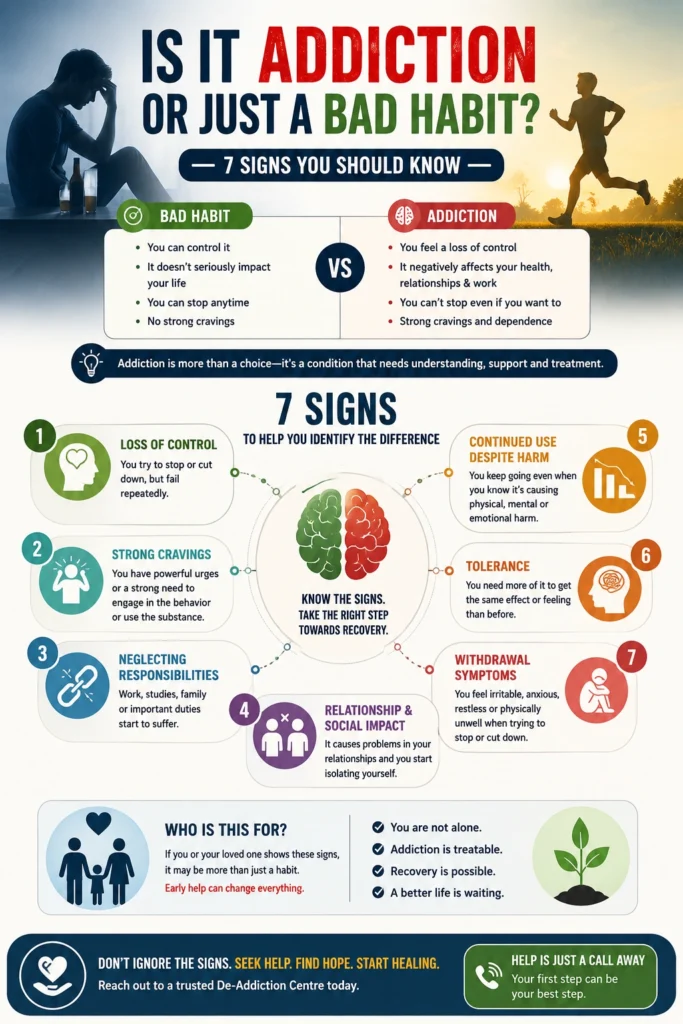
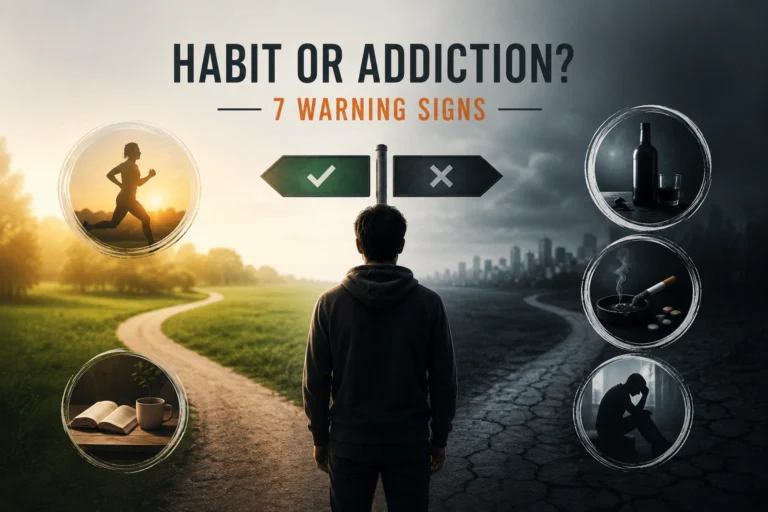
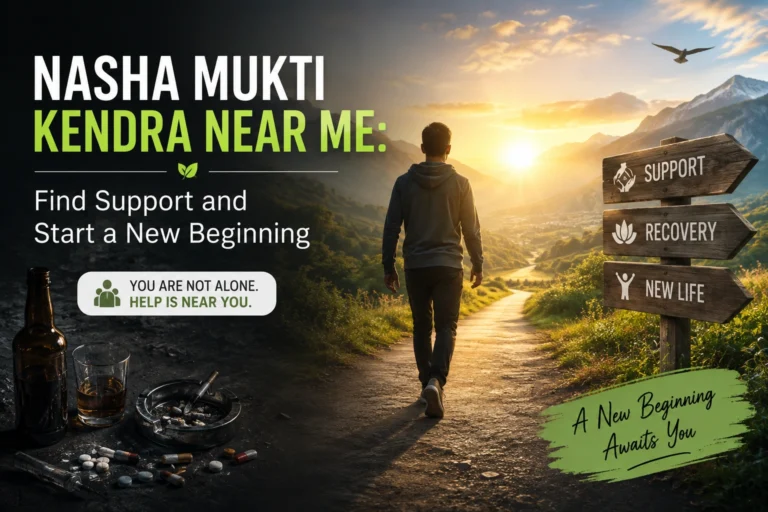
We all have habits we’re not proud of — scrolling too much, snacking late at night, or having one drink too many at a party. But where does a habit end and addiction begin? This is a question many families in Uttarakhand and across India quietly struggle with, often waiting too long to seek help because they assume “it’s just a phase” or “they’ll grow out of it.”
Understanding the difference early can make all the difference in getting timely support. Here are seven signs that can help you tell a habit apart from something more serious.
1. Loss of Control
A habit is something you choose to do. Addiction is something that starts controlling you. If a person repeatedly tries to cut back or stop — whether it’s alcohol, drugs, or even certain behaviours — and consistently fails despite genuinely wanting to quit, that’s a red flag worth paying attention to.
2. Increasing Tolerance
With a habit, the pattern usually stays the same over time. With addiction, the amount or frequency tends to increase. The person needs more of the substance to get the same effect, which often happens without them even realizing how much their intake has grown.
3. Withdrawal Symptoms
One of the clearest indicators of addiction is physical or emotional discomfort when the substance isn’t available — irritability, anxiety, sweating, nausea, or restlessness. A simple bad habit rarely causes the body or mind to react this strongly when paused.
4. Neglecting Responsibilities
When work, family, or health starts taking a back seat because of substance use, it’s no longer just a habit. Missed deadlines, skipped family functions, or declining performance at school or work are often the first visible signs that something deeper is going on.
5. Secretive or Defensive Behaviour
People struggling with addiction often go out of their way to hide their usage — lying about where they’ve been, becoming defensive when questioned, or isolating themselves from loved ones. Habits, on the other hand, don’t usually come with this level of secrecy or guilt.
6. Continued Use Despite Consequences
This is perhaps the strongest indicator. If someone keeps using a substance even after it has caused health problems, relationship conflicts, financial trouble, or legal issues, it points toward dependency rather than a simple lifestyle choice.
7. Changes in Mood and Relationships
Addiction often brings noticeable shifts in personality — increased aggression, mood swings, or emotional distance from family and friends. If people around you have started expressing concern about changes in your behaviour, it’s worth taking that seriously rather than dismissing it.
When to Seek Help
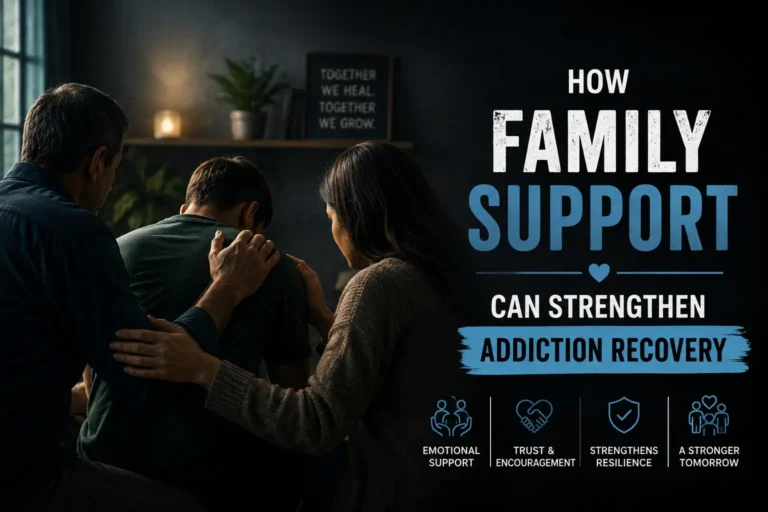
If several of these signs sound familiar — whether for yourself or someone you care about — it may be time to look beyond willpower and self-control as the solution. Addiction is a medical condition, not a character flaw, and it responds well to structured treatment, counselling, and a supportive recovery environment.
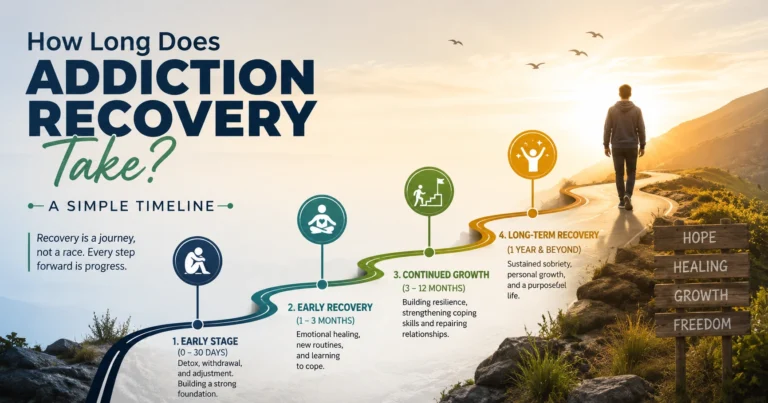
This is exactly the kind of support that Hamara Sankalp Nasha Mukti Kendra, based in Haldwani, Uttarakhand, has been offering to individuals and families across the Kumaon region. With a focus on medically guided detox, counselling, and long-term rehabilitation, the center works closely with patients and their families to help them move from dependency toward lasting recovery.
Recognizing the signs early is the first step. Reaching out for professional help is the next — and it’s a step that can change everything.
This article is for general informational purposes only and is not a substitute for professional medical diagnosis. If you or someone you know is struggling with addiction, please consult a qualified healthcare provider or de-addiction specialist.