How Family Support Can Strengthen Addiction Recovery
Family Support in Addiction – It’s easy to think of addiction as something that isolates the addict, but in reality, it has a profound effect on the entire family. Parents, spouses, children and siblings all carry the burden of watching a loved one fall victim to the grip of substance abuse. However, many fail to realize that it is this very same family unit that can be one of the most important tools in recovery. While professional treatment sets the stage for sobriety to develop, family support is often what allows it to endure over the long term.
The Power of Family in Recovery
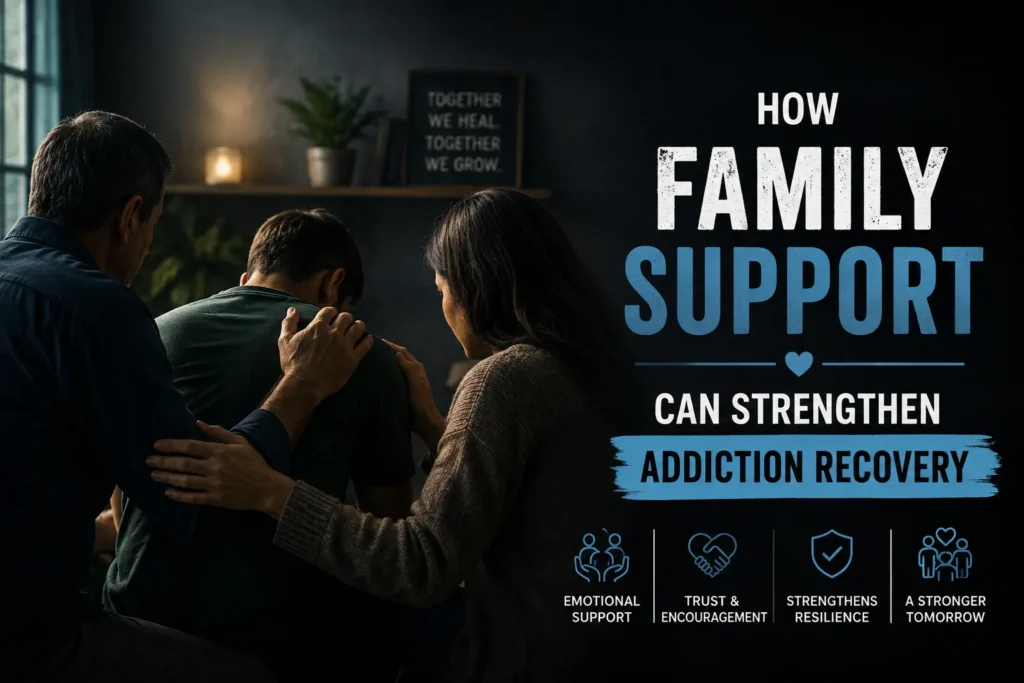
Recovery, as defined here, is about much more than simply detoxifying the body of the substances and conquering the physical dependency on them. It is an emotional and psychological journey that takes time, requires trust, and hinges on a sense of belonging. When families become actively involved in treatment and the recovery process, the addict feels less isolated and more compelled to maintain sobriety. It is well established in addiction psychology that patients with a strong system of family support are far more likely to enjoy successfully sustained abstinence over the long term compared with those who have not. Family involvement rebuilds the broken trust associated with addiction. Most importantly, family support creates accountability for the addict not only to him or herself but to those who care for them.
Reducing Relapse With Emotional Support
One of the core challenges of recovery is managing stress and negative emotions without succumbing to the temptation of returning to old habits. Family members can alleviate this tendency by creating a stable emotional environment in the home, where the addict feels safe enough to express rather than hide or act out their feelings.
When the family learns to communicate with one another empathetically rather than judgmental, the shame which most strongly triggers a lapse into substance abuse is largely defused. Small everyday behaviors such as frequent contact throughout the day, acknowledgement of small successes, and avoid throwing blame for mistakes can help a great deal with coping with the highs and lows that accompany addiction recovery.
Family Therapy and Education
Recognizing that the problem cannot be cured while the problem and the addict exist in separate vacuums, rehabilitation facilities now tend to include a variety of forms of family counseling and therapy as part of the treatment they offer. The purpose of these session is for family members to learn that addiction is a disease (rather than a moral failing, as it may otherwise be wrongly perceived by many non-addicts). They help them learn to support without enabling and to enforce boundaries appropriately: enabling leads to resentment and lack of control causes fear of re-lapse.
In centers such as Hamara Sankalp Nasha Mukti Kendra, in Haldwani, Uttarakhand, these elements are incorporated from the outset, coupled with the typical treatments for substance abuse, such as medical detox and individual therapy. Families are provided with guidance as they learn about treatment and all the steps involved in ensuring that the recovering addict is not negatively influenced by old patterns once he or she leaves the rehabilitative center and returns home. Through combining these different family and individual techniques, addiction centers are learning that treatment is most effective when the family experiences healing as it recovers along with the addict.
Stability and the Reintegration into the Home
Once the professional has helped and supported the addict through withdrawal and the core aspects of rehabilitation, the addict must face the reality of re-integrating into the home environment. Any environment that is chaotic, stressful, or devoid of positive affirmation will sabotage the months and sometimes years worth of work undergone by the addict in overcoming the disease of addiction and any of its associated physical and behavioral conditions. A predictable and low-stress home allows the addict to have the necessary stability needed to start his or her life over.
To achieve this, family members must work together to enforce a stable home structure, encouraging healthy lifestyle habits such as good hygiene, reasonable sleep patterns and time constraints in addition to keeping away from old circles or locations that encouraged old habits, while supporting the addict’s participation in other support groups for them and for the family.
Rebuilding Trust Will Take Time
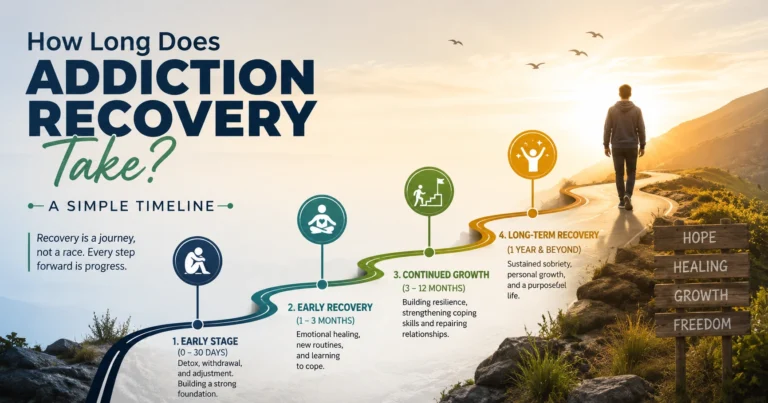
Families of addicts must recognize that repairing the damage caused by broken trust cannot be done overnight. This will be a long and somewhat rocky process, as it will have to occur over time and with the eventual setback of at least one significant failure or relapse. Families must be patient and realistic in their expectations that recovering addicts rarely have a perfectly linear path to sobriety.
Centers such as Hamara Sankalp Nasha Mukti Kendra also provide support with this realization for family members and friends so that they understand and do not mistake a hiccup for a full-scale relapse into what they thought they had already overcome, and so they are equipped with helpful strategies and techniques for both eventualities rather than reacting out of fear and anger.
In Conclusion
Addiction can sometimes seem like an individual battle against a single person, but it is never just that. While a professional can provide the necessary tools for withdrawal and therapy and facilitate the overcoming of the most difficult parts of the physical dependency on addictive substances, without the persistent support of family, the recovery process is nearly always incomplete. Through informed and empathetic support networks, as well as a stable home environment, family members and loved ones can become the most powerful partners in overcoming any type of addiction. Drug and alcohol rehabilitation facilities that emphasize family therapy and incorporate family members into treatment, much like Hamara Sankalp Nasha Mukti Kendra in Haldwani, are demonstrating the effective power of a team approach in the fight against addiction and are helping entire families achieve lasting and sustainable health.