“Sir, kitne din mein theek ho jaayenge?”
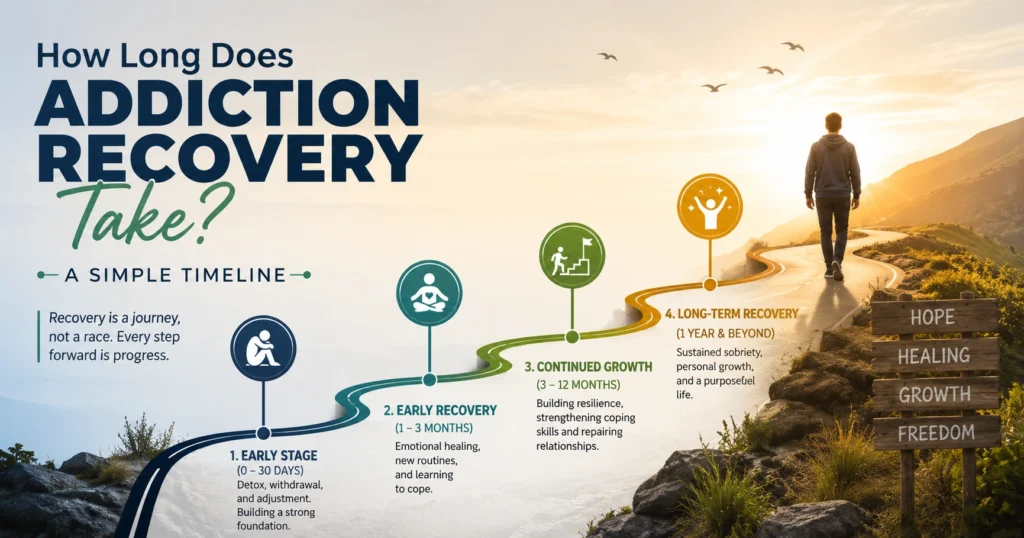
It’s usually the first question a worried parent or spouse asks when they walk through the doors of a nasha mukti kendra in Haldwani. And it’s a fair question — nobody wants to watch someone they love struggle a day longer than necessary. But the honest answer is rarely a single number. Addiction recovery isn’t a fixed countdown; it’s a process that unfolds in stages, and each stage takes the time it takes.
At Hamara Sankalp Nasha Mukti Kendra Haldwani, we’ve walked alongside hundreds of families through this journey — from the panic of the first phone call to the quiet relief of watching someone rebuild their life. What we’ve learned, and what research backs up, is that recovery has a rhythm. Knowing that rhythm makes the whole process feel less frightening and a lot more manageable.
It’s tempting to want a fixed timeline — 30 days, 90 days, six months — and then move on. But addiction changes the brain, not just behaviour, and the brain heals on its own schedule. Research shows the brain typically needs at least 12 to 24 months of sustained abstinence for meaningful neurological stabilization, and full recovery of dopamine receptor function can take anywhere from three to five years depending on the substance and how long it was used.
That number can feel overwhelming at first read. But it doesn’t mean someone is “unwell” for years — it simply means the deeper healing continues long after the person looks and feels fine on the outside. The visible part of recovery (getting sober, staying sober, going back to work or college) often happens much faster than the invisible part (the brain quietly rewiring itself).
This is where every recovery journey begins: clearing the substance from the body under medical supervision.
For alcohol, withdrawal symptoms typically start within six to twelve hours of the last drink, peak between 24 and 72 hours, and begin to ease within about a week. Other substances behave differently — opioid withdrawal can take a week or more to settle, while benzodiazepine withdrawal often needs weeks or even months of careful, gradual tapering to avoid dangerous complications.
This is exactly why unsupervised “cold turkey” attempts at home are risky. A proper nasha mukti kendra in Haldwani with trained medical staff can monitor vitals, manage complications, and make this stage as safe and comfortable as possible.
One important reality check: detox alone does not treat addiction. According to NIDA, most people who stop at detox without follow-up care return to substance use fairly quickly. Detox opens the door to recovery — it isn’t the destination.
Once the body has stabilised, the real work begins. This phase can last anywhere from the first month up to a full year, and it’s less about surviving and more about relearning how to live without the substance.
This is also the stage families find most confusing, because the person may look physically fine but still feel emotionally raw. That’s because of something called Post-Acute Withdrawal Syndrome (PAWS) — a cluster of symptoms including foggy thinking, disturbed sleep, and emotional ups and downs that can continue for weeks or months after detox is over. Many people mistakenly expect to feel “normal” by this point, which is why relapse risk and discouragement often peak right here.
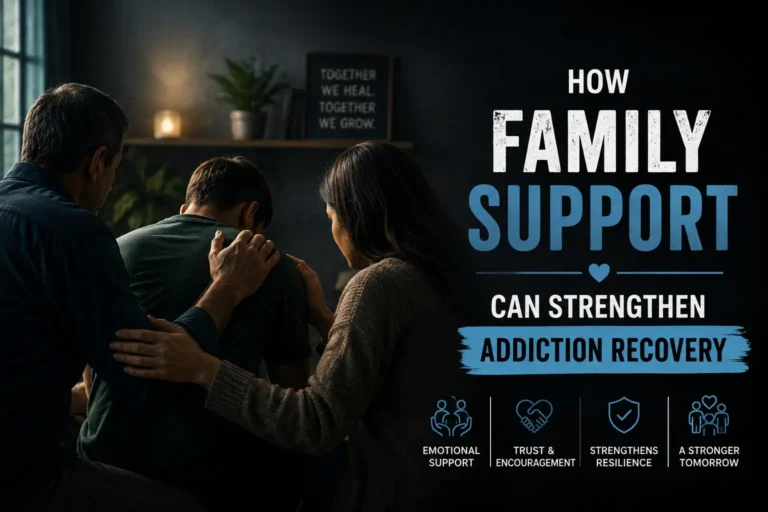
At this stage, structured counselling, group therapy, family involvement, and daily routine-building matter enormously. It’s also usually when someone in treatment starts uncovering the why behind their addiction — unresolved trauma, chronic stress, undiagnosed anxiety or depression — issues the substance had been quietly masking.
Somewhere between the one-year and two-year mark, recovery starts to feel less like a daily battle and more like a way of life. Cravings become less frequent and less intense, new habits and relationships take root, and identity gradually shifts from “a person in recovery” to “a person who has recovered.”
Importantly, vulnerability to relapse remains higher than baseline even at this stage — which is exactly why aftercare, family support, and periodic check-ins with a rehabilitation center shouldn’t stop just because things are going well.
This is the long horizon. Reaching a level of neurological and psychological resilience where relapse risk drops significantly typically takes three to five years of continuous recovery work. By this point, sobriety isn’t something a person is actively “managing” every day — it’s simply who they’ve become.
If a family needs one honest, practical answer, it looks something like this:
Research also points to a useful short-term marker: the “action phase” of recovery — where old patterns genuinely start breaking down and new ones take hold — typically needs 30 to 90 days of consistent effort, and staying engaged in treatment and aftercare for at least three months is strongly linked to better long-term outcomes.
One thing every family should hear early: relapse isn’t a required part of recovery, but it isn’t automatic failure either — it’s often a signal that the treatment plan needs adjusting, not a reason to give up. Recovery is rarely a straight line, and a setback doesn’t erase the progress already made.
Every one of these timelines assumes proper, professional support — medical detox, structured therapy, and consistent aftercare. Trying to shortcut any of these stages, or attempting them without guidance, almost always makes the road longer, not shorter.
This is where a dependable nasha mukti kendra in Haldwani makes a genuine difference. At Hamara Sankalp Nasha Mukti Kendra Haldwani, we combine medically supervised detox, individual and group counselling, family therapy, and structured aftercare to support patients through every one of these stages — not just the first thirty days. Serving Haldwani and the wider Kumaon region, including Almora, Ranikhet, and Pithoragarh, our approach is built around one simple belief: recovery isn’t an event, it’s a journey, and no one should have to walk it alone.
If you or someone in your family is looking for the right first step, reach out to Hamara Sankalp Nasha Mukti Kendra Haldwani. The timeline may take patience — but with the right support, every stage of it becomes possible.
best nasha mukti kendra haldwani गर्व से WordPress द्वारा संचालित