The Family’s Role in Addiction Recovery:
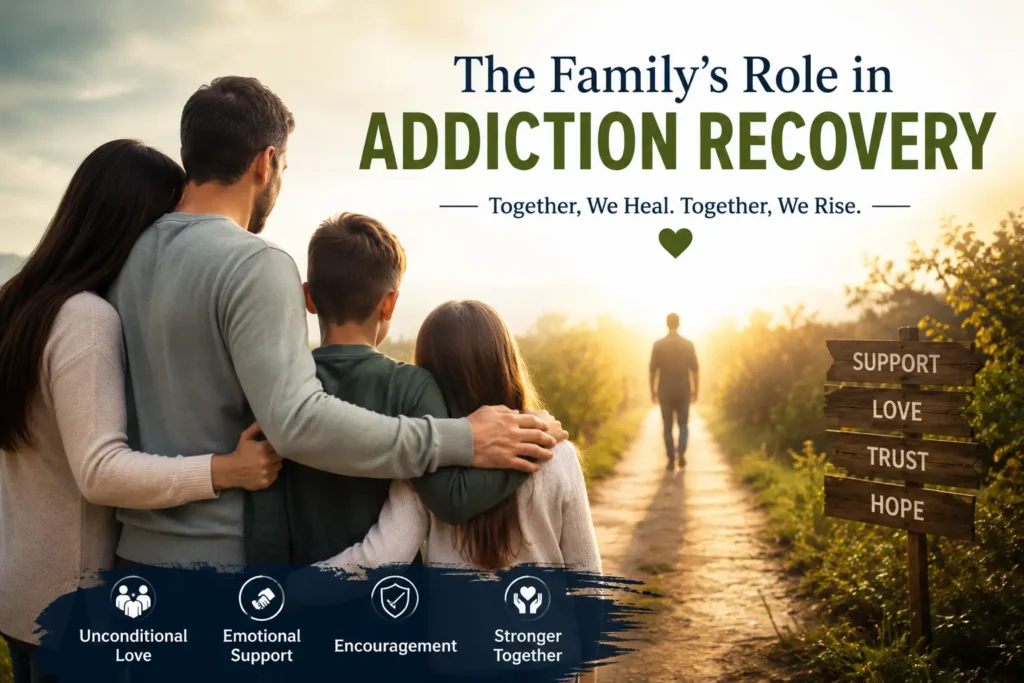
When someone begins the journey of recovery from addiction, the treatment they receive at a rehabilitation center is only one part of the picture. What happens at home — the conversations, the patience, the boundaries — often decides whether recovery holds long-term. At Hamara Sankalp Nasha Mukti Kendra in Haldwani, we’ve seen time and again that families aren’t just bystanders in this process. They’re active participants in it. Here’s how families across Haldwani, Almora, Ranikhet, and Pithoragarh can support a loved one’s recovery journey, while also protecting their own wellbeing.
1. Educate Yourself About Addiction
Addiction is a complex condition, not a character flaw or a matter of willpower. Understanding this shift — from “why can’t they just stop” to “this is a condition that needs treatment” — changes how families respond. When you understand the nature of addiction, you’re better equipped to respond with patience instead of frustration, and support instead of shame.
2. Practice Open, Judgment-Free Communication
Recovery can bring up guilt, fear, and defensiveness. Families that create space for honest conversation — without lecturing or blaming — tend to see their loved ones open up more. Simple habits help:
- Listen more than you speak
- Avoid bringing up past mistakes during arguments
- Ask “how can I support you today” instead of “why did you do this”
3. Set Healthy Boundaries
Supporting someone doesn’t mean tolerating everything. Boundaries protect both the person in recovery and the family. This might mean not covering up consequences, not giving money without questions, or being clear about what behavior won’t be accepted at home. Boundaries, when explained with care rather than anger, actually reinforce accountability — a key part of lasting recovery.
4. Avoid Enabling Behavior
It’s natural to want to protect a loved one from hardship. But shielding them from the natural consequences of addiction — lying on their behalf, paying off debts caused by substance use, or making excuses to others — can unintentionally slow down recovery. Support looks different from rescue.
5. Be Patient With the Process
Recovery isn’t linear. There will be difficult days, and possibly setbacks. Families who understand that healing takes time — often months or years — are better positioned to stay supportive without becoming discouraged. Celebrate small milestones instead of only measuring success by “complete and permanent change” on day one.
6. Take Care of Yourself Too
Supporting a loved one through addiction recovery is emotionally demanding. Family members often carry stress, anxiety, or exhaustion of their own. Seeking your own support — whether through counseling, a trusted friend, or a support community — isn’t selfish. A family that’s emotionally resourced is far better equipped to help someone else heal.
7. Stay Connected With the Treatment Team
Family involvement in the treatment process — through counseling sessions, family therapy where offered, or simply staying in touch with the care team — helps create continuity between the center and home. Recovery works best when it isn’t confined to a treatment facility but continues as a shared effort.
At Hamara Sankalp Nasha Mukti Kendra, we work not just with individuals but with the families standing beside them. If your family is navigating a loved one’s recovery journey and you’d like guidance, our team in Haldwani is here to help — for the person healing, and for the family healing alongside them.