Does Home Environment Shape Addiction Risk in Childhood?
Long before anyone takes that first drink or swallows that first pill, a child’s susceptibility to addiction could have already begun-within the confines of their own childhood home. Beyond genetics and personal choice lies something incredibly powerful: environment. Growing research and years of clinical practice confirm that a child’s early home environment may subtly predetermine vulnerability.
Home-A Child’s First Model
Children observe and internalize everything they’re exposed to, not just what they’re told. Growing up in a chaotic home marked by interpersonal conflict, inconsistency or emotional neglect teaches a young person that the world is unsafe and emotions are something to be suppressed, not processed. For some of them, drugs and alcohol become that substitution of something they never learned how to achieve, for something they never learned how to withstand. Children are keen observers, and a family’s or a parent’s use of drugs or alcohol can become a silent model, “how tocope with life.
Emotional Environment Plays a Role Too
It isn’t simply whether substances are readily available in the home. Childhood poverty, a history of neglect and lack of consistent, reliable emotional support can cultivate in an individual a deep, largely unconscious, yearning to escape-a void that can be seemingly and frighteningly filled by drugs or alcohol. An environment with persistent criticism, emotional unavailability, or chaos from day to day can leave behind an imprint that will resurface in adulthood, in the form of anxiety, inadequacy or intense stress.
Predictors of Protective Childhood Environments Can Turn the Tide
The most uplifting part about this link is the truth that childhood experience isn’t fate-it is, as in all instances, the beginning or a hint at a child’s future outcomes. Children who feel they have at least one stable and supportive adult who is available to them; who were raised in homes withclear boundaries and with open communication throughout childhood) naturally are better equipped to handle stressors than others. A safe and supported home that is free from pervasive and prolonged shame can be a protective factor and keep individuals from utilizing chemicals as a way of coping.
Its Role in Recovery
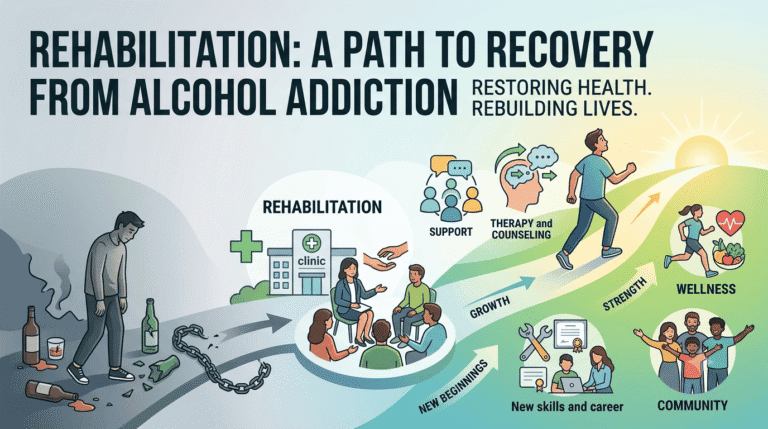
This linkage isn’t about placing the blame, rather for the purpose of understanding in order to prevent the cycle from continuing. A number of patients enter de-addiction treatment bearing the scar of a childhood that remained unaddressed. It is crucial not to treat addiction without dealing with its roots (childhood), as this opens one up for lifelong struggle that might result in repeat addictions. It’s also the reason why the role of the family during the course of treatment is indispensable-not to rehash pain, but to help restore the kind of structure that encourages everlasting change.
At Hamara Sankalp Nasha Mukti Kendra, we witness this consistently and this is what guides our entire treatment process — not simply dealing with the symptoms of intoxication, but understanding the root of it all to achieve an everlasting recovery.