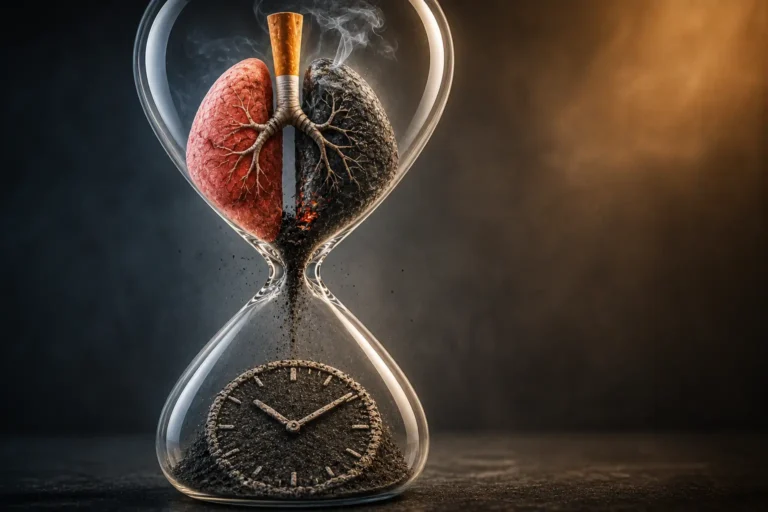
A glass of wine at a wedding. A beer with friends after work. A celebratory toast on a birthday. For most people, alcohol is woven into social life without ever becoming a problem. But for others, what starts as occasional drinking slowly turns into something they can no longer control — and often, neither the person nor their family notices the shift until it has already caused serious damage.
Understanding where “social drinking” ends and “alcohol addiction” begins is one of the most important things a family can learn, because early recognition can mean the difference between a simple course-correction and years of struggle.
What Social Drinking Actually Looks Like
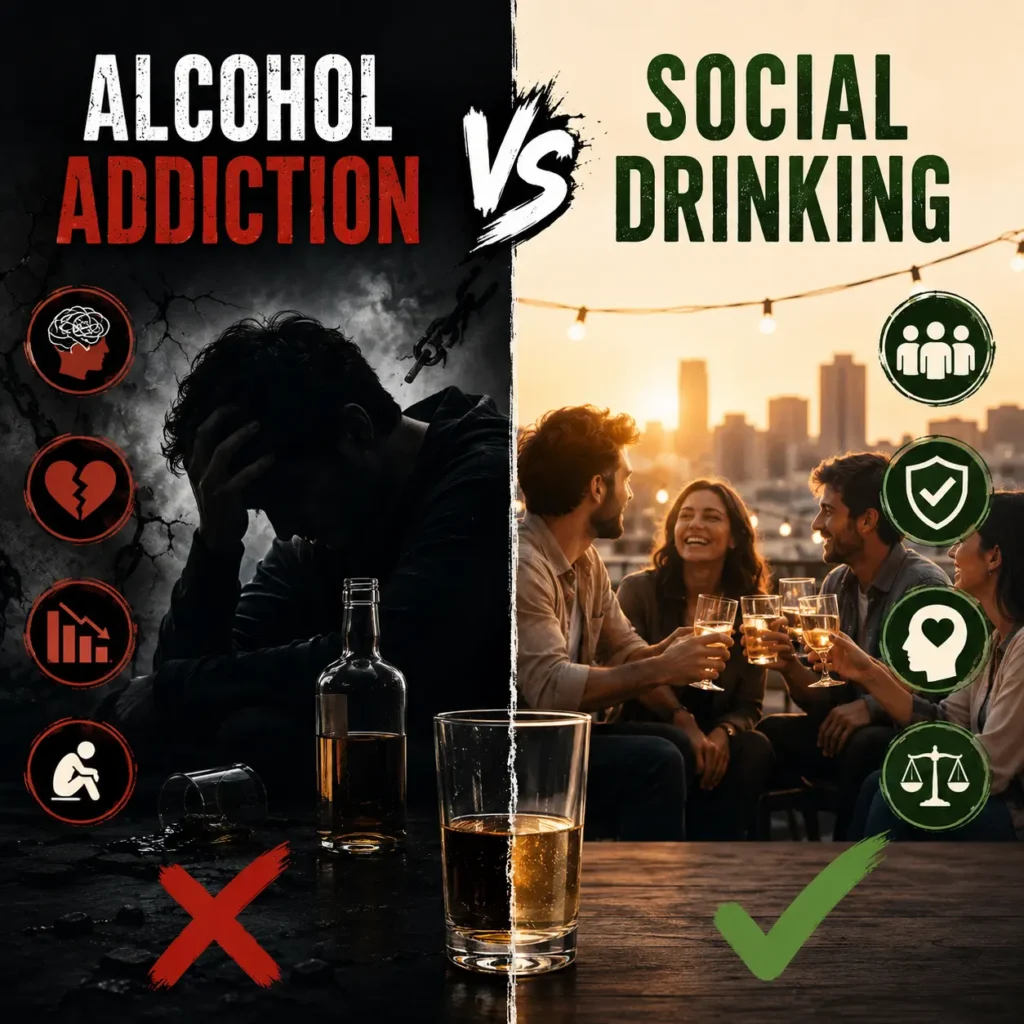
Social drinking is occasional, situational, and controlled. A social drinker:
-
- Drinks only in specific settings — parties, celebrations, or casual get-togethers
-
- Can easily stop after one or two drinks
-
- Goes days or weeks without any alcohol and doesn’t think about it
-
- Never drinks to cope with stress, sadness, or anxiety
-
- Has no difficulty fulfilling work, family, or social responsibilities
-
- Feels no guilt, secrecy, or defensiveness around their drinking habits
In short, alcohol plays a small, optional role in their life. It is a choice, not a need.
Where Alcohol Addiction Begins
Alcohol addiction (also called Alcohol Use Disorder) develops gradually. It rarely announces itself with a single dramatic moment — instead, it creeps in through small changes in frequency, quantity, and reason for drinking. Some of the clearest warning signs include:
1. Drinking Alone or in Secret Social drinkers drink around others; someone struggling with addiction often starts drinking alone, hiding bottles, or lying about how much they’ve consumed.
2. Increasing Tolerance Needing more alcohol over time to feel the same effect is one of the earliest physical signs that the body is adapting to regular alcohol use.
3. Drinking to Cope, Not to Celebrate When alcohol becomes a way to manage stress, loneliness, anger, or emotional pain rather than a way to enjoy a social occasion, it signals a deeper dependency forming.
4. Loss of Control Trying to “just have one drink” but ending up finishing the bottle. Planning to stop and being unable to.
5. Neglecting Responsibilities Missing work, ignoring family duties, or skipping important commitments because of drinking or recovering from drinking.
6. Withdrawal Symptoms Shakiness, sweating, irritability, nausea, or anxiety when alcohol is not consumed for a few hours or a day — this is a strong physical indicator of dependency.
7. Continuing Despite Consequences Relationship conflicts, health warnings from doctors, or financial strain caused by drinking — yet the person continues anyway.
8. Failed Attempts to Cut Down Repeatedly promising to drink less or quit, and repeatedly being unable to follow through.
If even two or three of these patterns sound familiar — for yourself or someone you love — it’s worth taking a closer look rather than dismissing it as “just a phase.”
Why Families Often Miss the Signs
Alcohol addiction is often mistaken for a lifestyle habit because drinking itself is socially accepted. Families frequently rationalize early warning signs: “He only drinks with friends,” “She’s just stressed at work,” “It’s not every day.” This normalization is exactly what allows addiction to progress quietly, often for years, before it becomes a crisis.
Another reason addiction goes unnoticed is shame. Many individuals struggling with alcohol dependency are high-functioning — they hold jobs, manage households, and appear “fine” on the surface — which makes both the individual and the family reluctant to acknowledge a problem exists.
When to Seek Professional Help
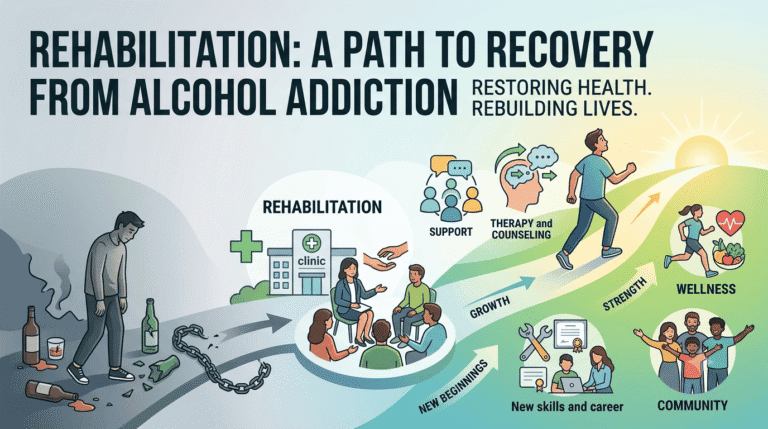
You don’t need to wait for a rock-bottom moment to seek help. If drinking has started to affect health, relationships, work, or emotional stability — even mildly — it’s the right time to consult a professional. Early intervention through counselling, medical detox, and structured rehabilitation is far more effective, faster, and less painful than waiting until the dependency becomes severe.
At Hamara Sankalp Nasha Mukti Kendra, we understand that every individual’s relationship with alcohol is different. Our approach combines medically supervised detox, one-on-one counselling, and family support to help patients not just stop drinking, but rebuild a stable, healthy life. If you’re unsure whether it’s time to seek help, that uncertainty itself is often a sign worth exploring.
Final Thought
The line between social drinking and alcohol addiction isn’t about how much someone drinks on any single occasion — it’s about control, frequency, and purpose. Social drinking adds to life; alcohol addiction slowly takes over it. Recognizing the difference early, without judgment or denial, is the first and most important step toward recovery.
If you or someone in your family is showing signs of alcohol dependency, reach out to Hamara Sankalp Nasha Mukti Kendra in Haldwani for a confidential consultation. Recovery is always possible — the sooner it begins, the easier the journey.