How Alcohol Addiction Affects Liver, Heart, and Overall Health
Alcohol addiction rarely announces itself through a single dramatic symptom. Instead, it works quietly over months and years, wearing down organ systems long before the outward signs become obvious. Understanding exactly how sustained heavy drinking damages the body — particularly the liver and heart — helps explain why early intervention matters so much.
The Liver: Ground Zero for Alcohol’s Damage
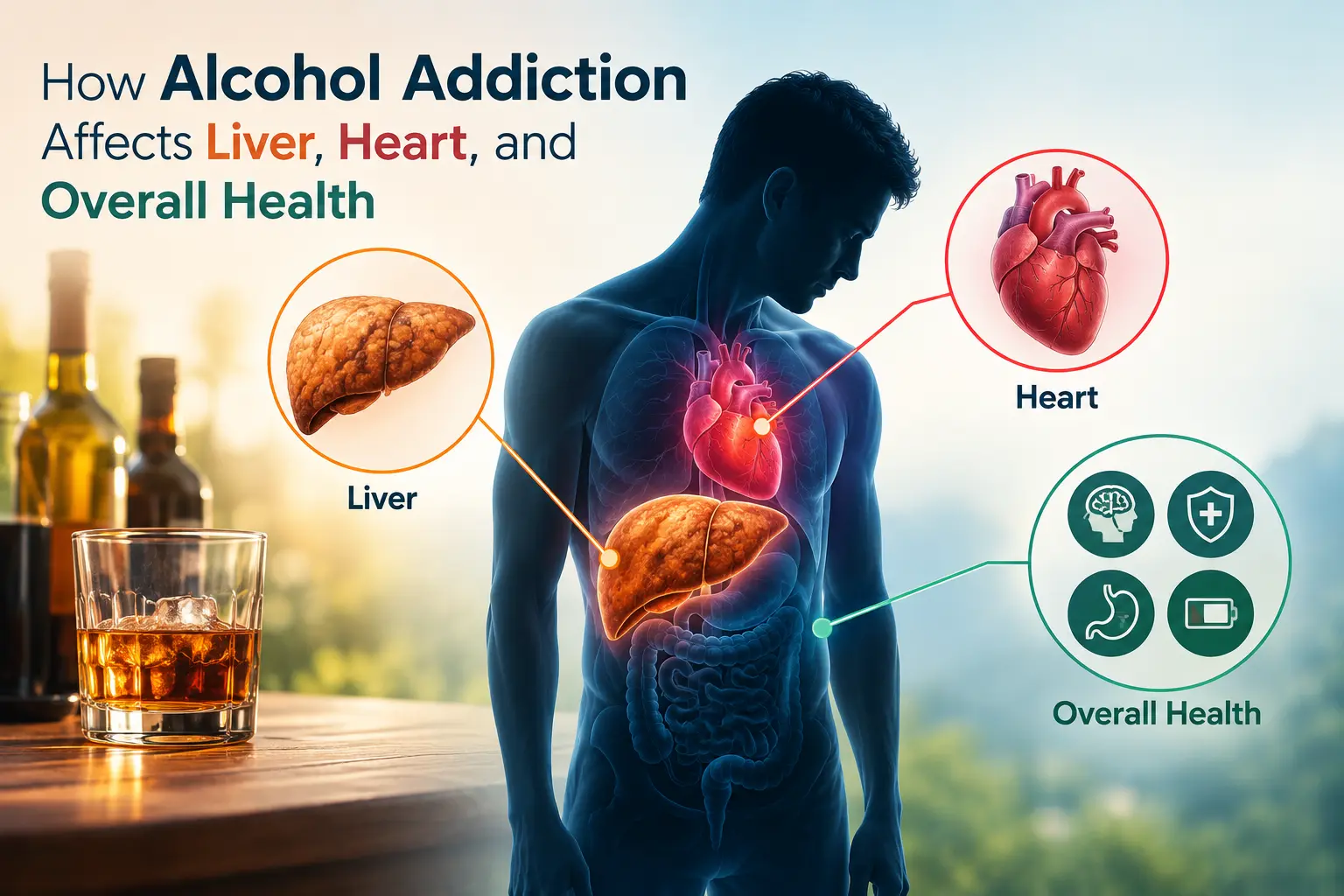
The liver bears the heaviest burden of alcohol metabolism, since nearly all the alcohol a person consumes passes through it for processing. With sustained heavy drinking, this workload takes a progressive toll. The damage typically unfolds in stages: it begins with fatty liver disease, where fat accumulates in liver cells; if drinking continues, this can progress to alcoholic hepatitis, an inflammation of the liver; and in advanced cases, it develops into cirrhosis, where healthy liver tissue is permanently replaced by scar tissue. Research also links alcohol consumption to broader metabolic disruption, including unhealthy shifts in body fat distribution that compound liver strain over time. Unlike some organs, the liver has a notable capacity to heal itself in the earlier stages if drinking stops — which is precisely why timely treatment can make a meaningful difference.
The Heart: A Complex and Serious Risk
Alcohol’s relationship with cardiovascular health is more layered than commonly assumed, but for anyone struggling with addiction, the picture is unambiguous: heavy and chronic drinking harms the heart. Sustained heavy consumption is strongly associated with hypertension, arrhythmias, stroke, and a condition called alcoholic cardiomyopathy, in which the heart muscle weakens and struggles to pump blood effectively — a condition responsible for a substantial share of non-ischemic cardiomyopathy cases in the West. Chronic alcohol use can also trigger dangerous heart rhythm disturbances, sometimes referred to as “holiday heart syndrome,” particularly after episodes of heavy drinking. Blood pressure increases driven by alcohol compound this risk further; even small, sustained rises in blood pressure are associated with meaningfully higher rates of stroke and coronary heart disease. While some population studies have observed different cardiovascular patterns at very low levels of alcohol intake, that nuance has no bearing on addiction — the doses and drinking patterns seen in alcohol use disorder consistently and significantly elevate cardiovascular risk.
Beyond the Liver and Heart
The damage rarely stays contained to one organ system. Chronic alcohol abuse is associated with harm to the brain and kidneys as well, and when alcohol use overlaps with other substances, the cumulative strain on the body’s vital organs — and the risk of a fatal overdose — increases further. Alcohol also disrupts the body’s ability to absorb and use essential nutrients, leading to deficiencies that weaken immunity, impair healing, and worsen mental health symptoms like depression and anxiety, creating a cycle where physical and psychological decline reinforce each other.
Why Early Intervention Matters
What makes this picture especially important is timing. Many of the earliest changes — fatty liver, elevated blood pressure, mild arrhythmias — are reversible if alcohol use stops before the damage becomes structural and permanent. Cirrhosis and advanced cardiomyopathy, by contrast, involve tissue damage that often cannot be undone. This is the core medical argument for treating alcohol addiction as early as possible: it isn’t just about stopping a habit, but about protecting organs that are still capable of healing. Recognizing alcohol addiction’s effect on the body is a necessary first step toward taking it seriously — not as a matter of willpower, but as a medical condition with measurable, and often reversible, physical consequences when addressed in time.







प्रातिक्रिया दे