लेखक: hamara sankalp

  • What Turns Smoking Into Chain Smoking? Causes You Should Know

    What Turns Smoking Into Chain Smoking? Causes You Should Know

    What Turns Smoking Into Chain Smoking? Causes You Should Know

    Most adult smokers develop a way of lighting a cigarette: after tea, after a meal, during a break. Chain smoking is rather different. One cigarette is lit almost immediately after another, and continues for hours. It’s not just a more powerful habit, it is an expression of a powerful addiction, in which various conditions contribute.

    The Nicotine Cycle

    Tobacco delivers nicotine to the brain in just 10 to 20 seconds when smoked. Nicotine stimulates the brain to release dopamine, the neurotransmitter that makes users feel good. But the drug’s high is brief. With a half-life of around two hours, the level of nicotine in the body begins to decline soon after each hit. The lower the level, the more you suffer: irritability, irritability, anxiety and a real urge. For a very dependent person, the fastest way to fight against these items is a cigarette. The habit then has nothing to do with the pleasure of smoking: the person smokes to mitigate his suffering. This is the chain effect!

    How the Brain Adapts

    With continuous nicotine intake, the number of brain nicotinic receptors increases, which means the brain requires higher nicotine doses to feel normal and smoking increases. Time to first cigarette after waking is one of the addiction indicators. The shorter the time to first cigarette (e.g. Within 30 mins after waking) the greater is the dependence and the harder is to quit.

    Stress and Emotional Triggers

    Cigarettes help us relax, some smokers say. And indeed, part of what they end up relieving us from is the withdrawal itself, not so much good vibes. In fact, research shows that smokers tend to start smoking with higher levels of stress than those who don’t smoke, and their stress levels go down when they quit. But in the moment, it’s a fix. People who are heavy smokers are more likely to experience mental health issues including depression and anxiety, and are often the ones to smoke more.

    Habit Cues and Environment

    They soon begin to associate smoking with things they do every day-drinking tea, driving, work stress, phone calls, or social events. The brain starts to default to automatically light up. With a chain smoker, cues are so common, the interval between cigarettes decreases. Alcohol and caffeine will trigger the craving further as well. It’s also about the environment. Being in an environment where others are smoking or working in an environment where it’s available and cheap makes it more likely that you will continue smoking heavily.

    Genetics and Early Start

    The speed at which an individual metabolizes nicotine depends on their genetics. For example, differences in the gene CYP2A6 are associated with smoking heavier. Smoking during adolescence also puts someone at risk, as the adolescent brain is more sensitive to the addictive substance and beginning to smoke at an earlier age can lead to smoking more heavily later in life.

    Why It Matters

    Cigarette smoking is the major cause of lung cancer. It also increases your risk of developing: heart disease, stroke and long-term lung problems. The more cigarettes you smoke, and the longer you smoke for, the greater your risk.

    Conclusion

    Hold on…stop and think. Tell someone you’re trying to give up? Willpower? It’s nothing to do with willpower – but it may have everything to do with nicotine’s fleeting effect, brain changes, stress, smoking triggers and, for some, genetic susceptibility. Learning about the causes of smoking is a good first step to giving up, but support from a health professional, counselling and nicotine replacement therapy can help.
  • Counselling Isn’t Just Talking — It’s a Science-Backed Treatment

    Counselling Isn’t Just Talking — It’s a Science-Backed Treatment

    Counselling Isn’t Just Talking — It’s a Science-Backed Treatment

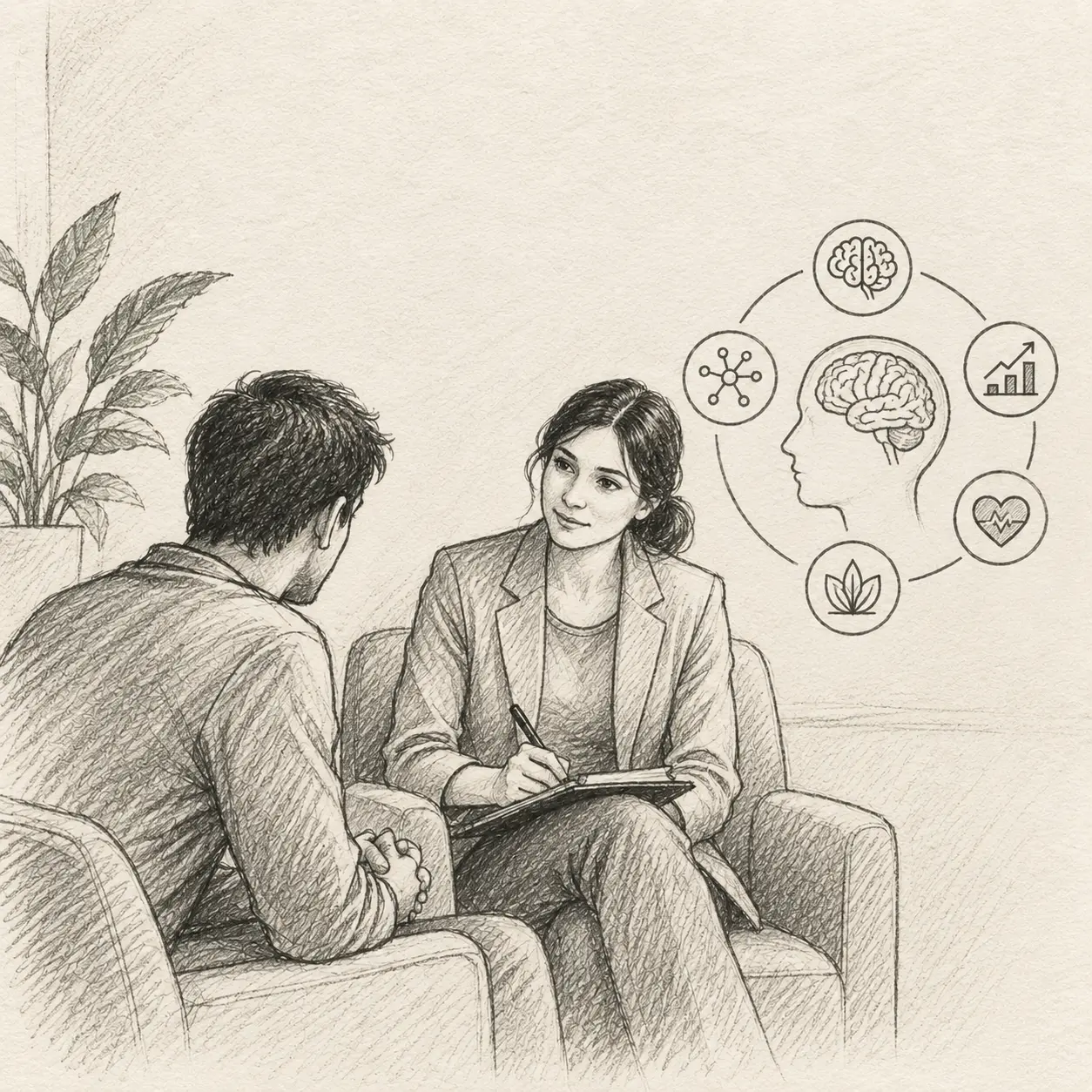
    To be fair, one of the most popular misconceptions about addiction counselling is that it “is just talking” and that it won’t be very effective against a physical addiction. While this myth may be the most popular, it’s also the most wrong. Decades of clinical study have shown that the brain, behaviour and relapse rate are statistically altered in psychotherapy and not just someone’s perception of reality.

    nasha mukti kendra uttarakhand

    Why the Myth Persists

    Other people are going to be key. As shocking as this may seem, an obvious difference, say, from a pill is that the presence of the pill itself is apparent; it makes itself evident because it is visibly seen, and that is something that is not so obviously apparent for talking.

    What Counselling Actually Does

    Addiction is a behaviour learned through association of thought, behaviour and emotional processes. This behaviour can be changed through effective counselling which practitioners work to change these reinforcing patterns of thought, behaviour and emotional coping, one at a time, using evidence based techniques:

    Cognitive Behavioural Therapy (CBT)

    is used to help a person identify the alcohol- or drug-using situations and thoughts that lead to drug- or alcohol-seeking behaviour and replace them with more appropriate coping mechanisms. Meta-analyses of CBT for substance use disorders report moderate to large effects of treatment versus no-treatment conditions.

    Motivational Interviewing (MI)

    is effective for overcoming ambivalence to change. MI is found to enhance treatment engagement and completion, especially among individuals uncertain about their change. Contingency Management involves the provision of scheduled incentives for verified abstinence. It has been rated as one of the most effective behavioural intervention for substance use disorders in many randomised controlled trials. Relapse Prevention Therapy informs people about the individual triggers that may affect them and how they can prepare themselves before any relapse triggers: this is what reduces relapse rates in follow-up research.

    The Brain-Level Evidence

    Brain-imaging research indicates that treatment, such as therapy, alters activity in brain areas associated with impulse control and decision-making, including the prefrontal cortex. Counselling, over time, seems to help re-establish some of the self-regulation that substance use knocks out of the brain. That’s not a metaphor. It is quantifiable, at the level of the brain.

    Why Counselling Is Most Effective When Paired with Medical Treatment

    When it comes to drugs such as alcohol, opioids and nicotine, medicine can deal with the physical dependence and cravings. But medicine is not enough to change the thoughts, stress reactions and environmental cues that maintain drug use. Studies involving thousands of people show that these two approaches combined can lead to far better long-term results than either approach used alone. So the WHO and other international treatment guidelines recommend this approach.

    Talking Is a Technique, Not Small Talk

    It’s also different to an unstructured chat. A trained counsellor will use techniques, using evidence-based approaches, and showing progress over time. It’s more like physiotherapy — the re-education of the brain — where you revisit the same exercises repeatedly until they work again, instead of just having the first chat.

    Conclusion

    To dismiss counselling as simply ‘talking’ ignores decades of scientific research. It is a systematic, skills-based intervention that has quantifiable impacts on behaviour, brain activity and long term recovery. As with any medical intervention, the effects it produces will depend on the way in which it is provided and the extent to which it is used, but the evidence is clear.

  • 10 Daily Habits That Help You Stay Away From Addiction

    10 Daily Habits That Help You Stay Away From Addiction

    10 Daily Habits That Help You Stay Away From Addiction

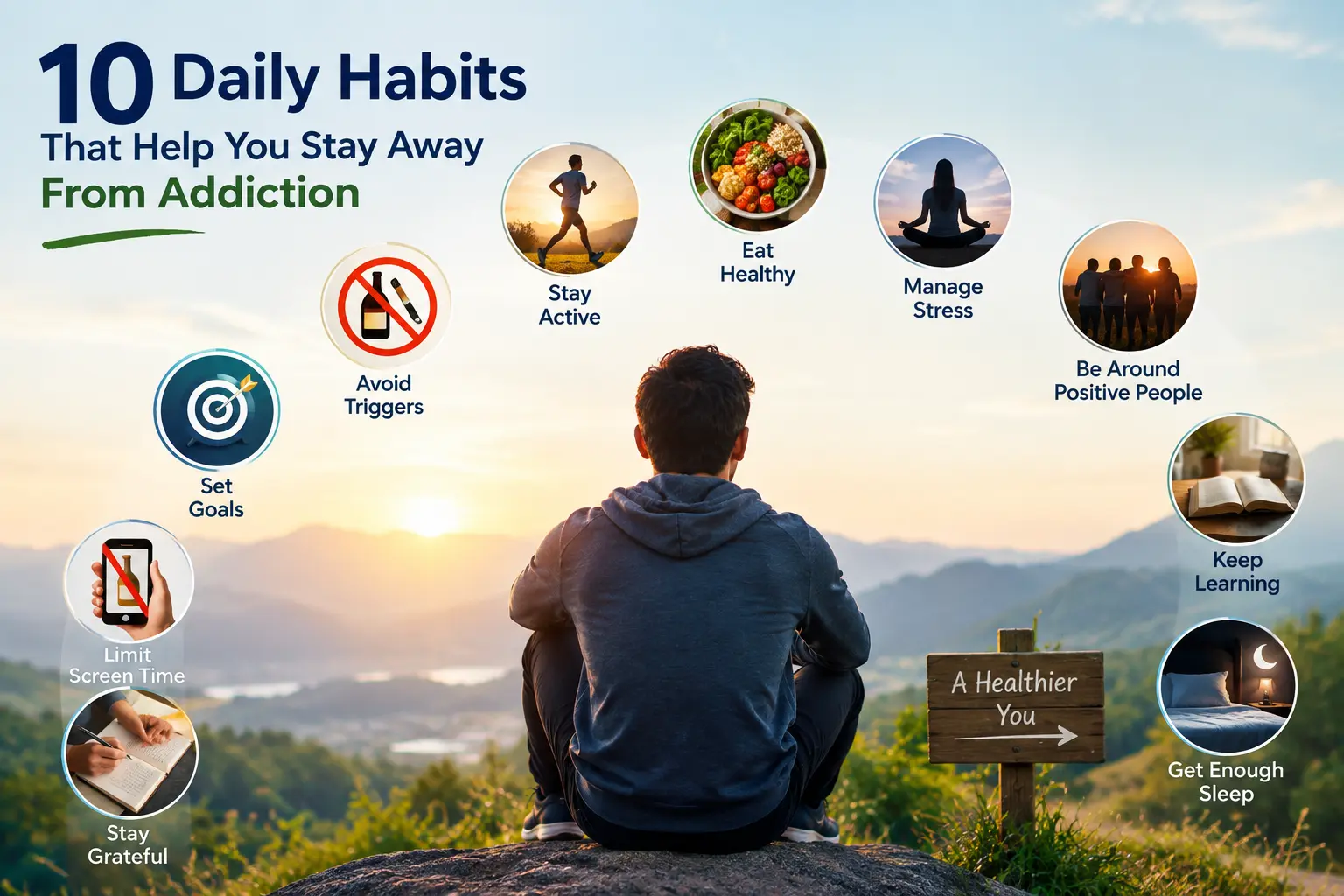
    Recovery from addiction is seldom about a single decision. Evidence suggests it is a series of tiny daily choices that reprogramme patterns of behaviour and lower chances of relapse. That is why many organisations focus on creating a steady routine when the brain is most vulnerable to old temptations.

    1. Regular Wake Up and Bedtime.

    Missed Sleep throws off the rhythm of your body and kickstarts stress hormones that cause you to crave more intensely. Regularly sleeping well has been correlated with improved depression management and lower relapse rates in addiction recovery.

    2. Eat Regular, Balanced Meals

    Alcohol and Drug Use: Substance use can interfere with hunger and drinking patterns. Blood sugar crashes caused by irregular eating may cause or intensify withdrawal signs like fatigue and crankiness. Maintain a consistent diet of 3 meals each day that contain quality protein and complex carbs.

    3. Exercise Daily, Even Briefly

    Exercise boosts dopamine and endorphins, naturally replacing some of the missing reward mechanisms due to drug use. Studies in addiction medicine journals have shown that a 20-30 minute moderate workout, such as a walk or yoga, will decrease cravings and anxiety.

    4. Practice Mindfulness or Meditation

    Mindfulness-based relapse prevention is a standard clinical technique. It helps people learn to observe cravings without immediately responding to them. Just 10 minutes of meditation or breathing each day can reduce stress reactivity over time.

    5. Avoid Known Triggers

    Some places, people or times of the day trigger cravings. If you can identify and even plan around these triggers, you may have fewer urges to relapse in early recovery.

    6. Stay Connected to Support

    Being isolated is one of the best predictors of relapse. Meeting up or keeping in regular contact with family and friends or within a peer group means that they can be there to hold you accountable and offer help when you need it. Peer support programmes have been shown to be effective in improving long term recovery.

    7. Keep a Structured Schedule

    Unscheduled Time Your cravings are more likely to hit when you are bored and have too much free time. Filling your calendar with schedules for work, chores, and relaxation helps you avoid unwanted downtime.

    8. Limit Stress Where Possible

    Long-term stress leads to elevated cortisol levels and triggers a return to old survival/coping mechanisms. Routine, daily management, such as a short walk, a few minutes of journaling, or simply sharing with another, will keep stressors from accumulating and becoming a trigger for relapse.

    9. Track Progress

    Track your small wins in a journal, such as an overcome craving, a full day under your belt. Self-monitoring is a practice that is a part of cognitive behavioural therapy.

    10. Set Small, Achievable Goals

    Big, broad goals such as “getting better” can be intimidating. When you set tiny daily goals, such as attending a single meeting or eating one healthy meal per day, you make steady progress.

    Conclusion

    None of them are a substitute for any other, and none are foolproof-yet. What they do have in common is that they add up to a daily routine that gives the brain a fighting chance, diminishes daily encounters with triggers, and helps restore a feeling of mastery. Consistency is key, not so much intensity.

  • Why Is Tobacco So Addictive? Causes and Proven Ways to Quit

    Why Is Tobacco So Addictive? Causes and Proven Ways to Quit

    Why Is Tobacco So Addictive ? Causes and Proven Ways to Quit

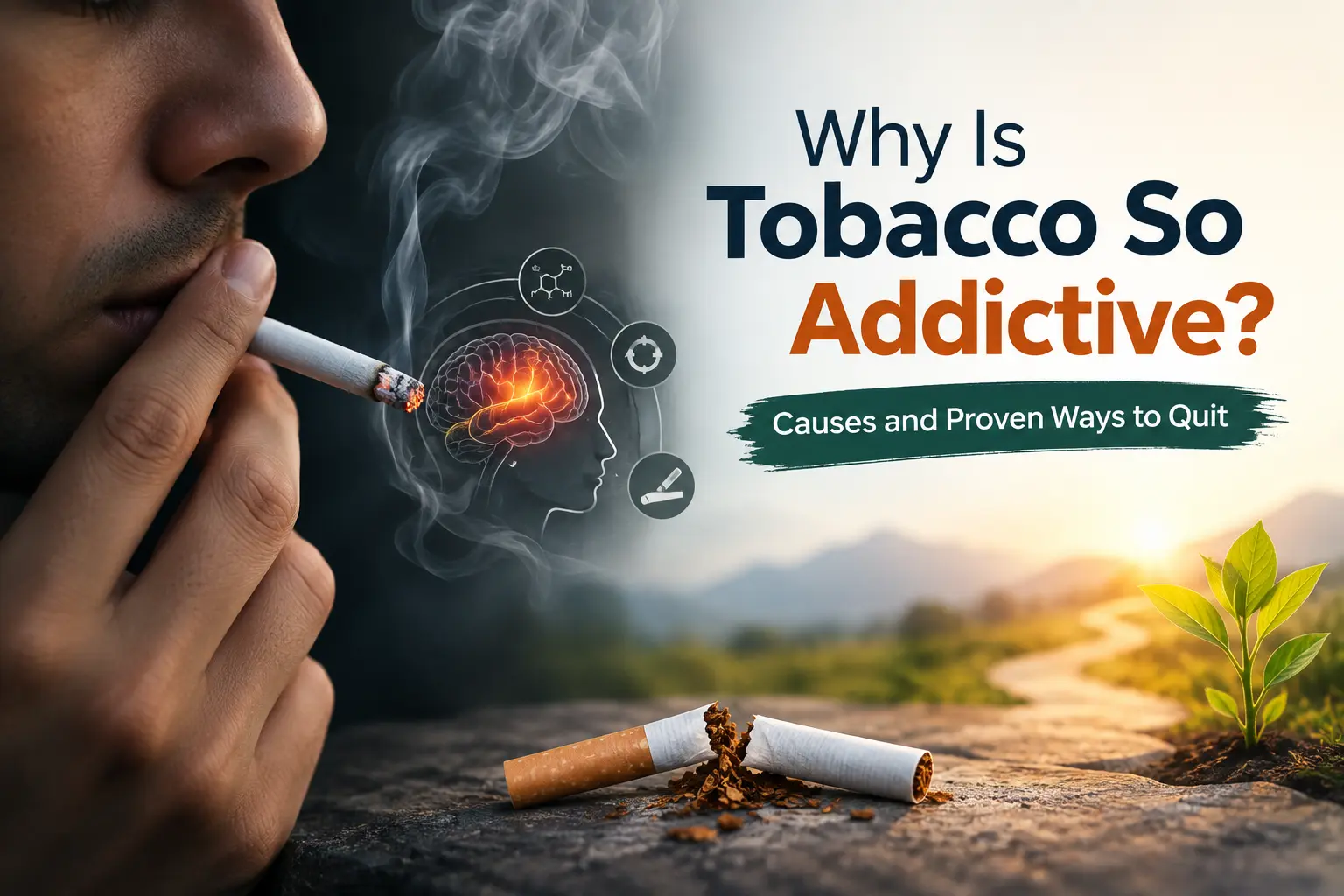
    Tobacco use causes more than 8 million deaths every year, according to the World Health Organization. Yet millions of people struggle to stop. The reason is not weak willpower. Tobacco contains nicotine, a drug that changes how the brain works, and quitting means working against both biology and habit.

    How Nicotine Hooks the Brain

    When tobacco is smoked, nicotine reaches the brain within seconds. It binds to nicotinic receptors and triggers a release of dopamine in the brain’s reward circuit, producing pleasure, alertness and a feeling of calm. The effect fades quickly, which encourages repeated use. Smokeless products such as chewing tobacco, gutkha and khaini deliver nicotine more slowly but in sustained doses, and they are equally addictive. With regular use, the brain adapts. It develops more nicotine receptors and becomes dependent on the drug to feel normal. When nicotine levels drop, withdrawal begins: irritability, anxiety, poor concentration and strong cravings. People often keep using tobacco not for pleasure but to escape these symptoms.

    Key Causes of Tobacco Addiction

    Genetics: Twin studies suggest that roughly half of the risk of nicotine dependence is inherited.
    Variations in genes such as CYP2A6, which affects how quickly the body breaks down nicotine, influence how heavily a person uses.
    Early exposure: Most adult users start in adolescence, when the brain is especially sensitive to nicotine.
    Psychological factors: Stress, anxiety and depression make tobacco appealing as a way to cope.
    Ironically, nicotine withdrawal itself increases stress.
    Social and environmental factors: Peer pressure, family use, cultural acceptance, low prices and easy availability all play a role.
    Habit cues: Tea breaks, meals, driving and social gatherings become automatic triggers over time.

    Proven Ways to Quit

    1. Prepare. Set a quit date, note your triggers and remove tobacco products from your home, bag and vehicle.
    2. Get behavioural support. Counselling, telephone quitlines and structured programmes improve success rates, especially when combined with medication. In India, the National Tobacco Quitline (1800-11-2356) offers free guidance.
    3. Consider medication. Nicotine replacement therapy (patches, gum, lozenges) reduces withdrawal symptoms. Combining a patch with a short-acting form works better than either alone. Prescription medicines such as varenicline and bupropion are also effective. Cochrane reviews show that approved treatments improve the chances of quitting by roughly 50 percent to more than double, compared with going without help. Always consult a doctor before starting any medication.
    4. Manage cravings. A craving usually peaks and passes within a few minutes. Delay, take slow deep breaths, drink water or go for a walk.
    5. Plan for slips. Most people need several attempts to quit for good. A lapse is not failure. Identify what triggered it and adjust your plan.

    The Benefits of Quitting

    The body begins to recover quickly. Heart rate and blood pressure start normalising within about 20 minutes, and carbon monoxide levels in the blood fall within a day. After one year without smoking, the risk of coronary heart disease is roughly half that of a continuing smoker. Over the years, the risk of cancer, stroke and chronic lung disease also declines significantly.

    Conclusion

    Tobacco addiction is driven by brain chemistry, genetics, emotions and environment, not by a lack of character. Understanding this removes the shame and points to what works: preparation, support, evidence-based medication and persistence.

  • How Alcohol Addiction Affects Liver, Heart, and Overall Health

    How Alcohol Addiction Affects Liver, Heart, and Overall Health

    How Alcohol Addiction Affects Liver, Heart, and Overall Health

    Alcohol addiction rarely announces itself through a single dramatic symptom. Instead, it works quietly over months and years, wearing down organ systems long before the outward signs become obvious. Understanding exactly how sustained heavy drinking damages the body — particularly the liver and heart — helps explain why early intervention matters so much.

    The Liver: Ground Zero for Alcohol’s Damage

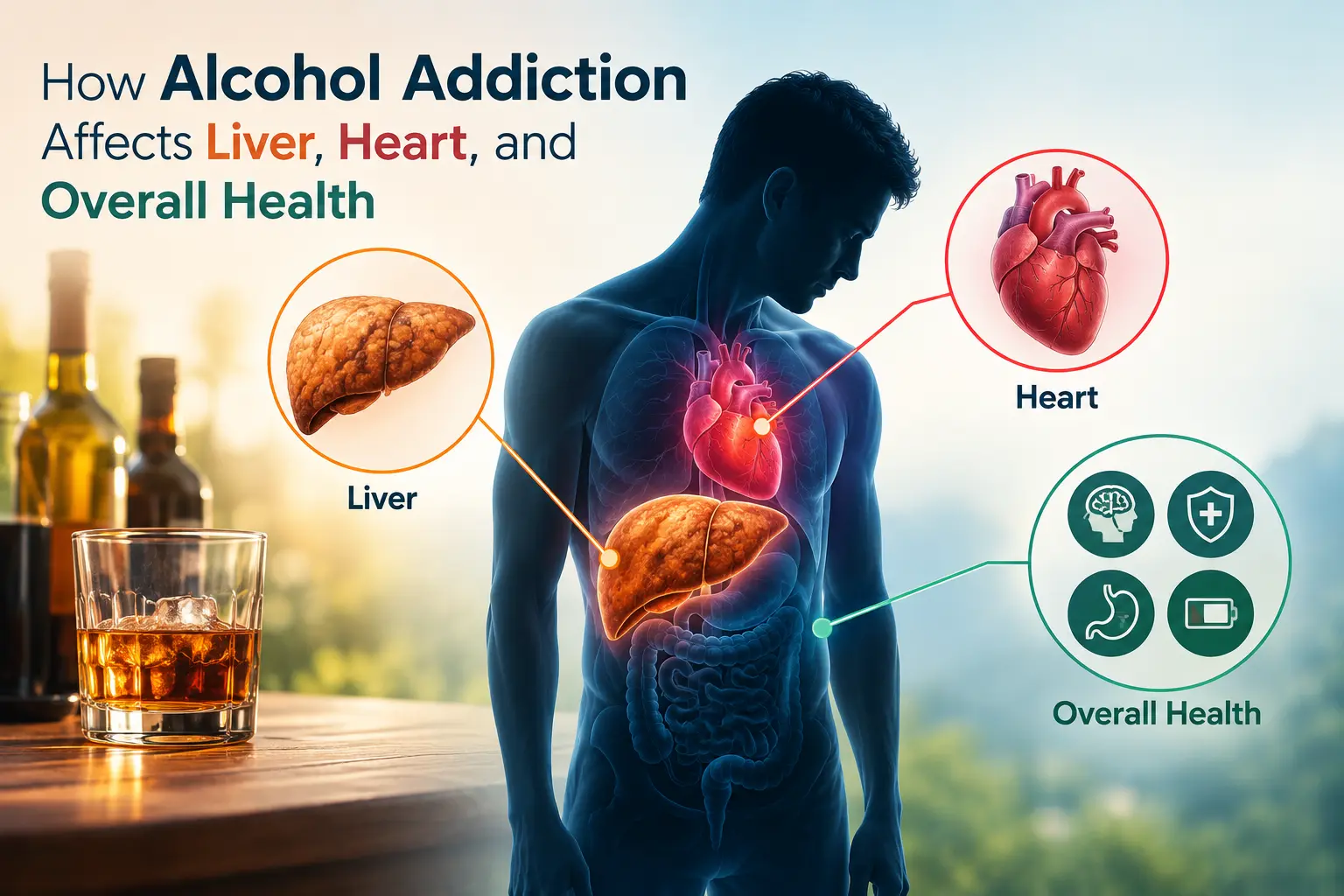
    The liver bears the heaviest burden of alcohol metabolism, since nearly all the alcohol a person consumes passes through it for processing. With sustained heavy drinking, this workload takes a progressive toll. The damage typically unfolds in stages: it begins with fatty liver disease, where fat accumulates in liver cells; if drinking continues, this can progress to alcoholic hepatitis, an inflammation of the liver; and in advanced cases, it develops into cirrhosis, where healthy liver tissue is permanently replaced by scar tissue. Research also links alcohol consumption to broader metabolic disruption, including unhealthy shifts in body fat distribution that compound liver strain over time. Unlike some organs, the liver has a notable capacity to heal itself in the earlier stages if drinking stops — which is precisely why timely treatment can make a meaningful difference.

    The Heart: A Complex and Serious Risk

    Alcohol’s relationship with cardiovascular health is more layered than commonly assumed, but for anyone struggling with addiction, the picture is unambiguous: heavy and chronic drinking harms the heart. Sustained heavy consumption is strongly associated with hypertension, arrhythmias, stroke, and a condition called alcoholic cardiomyopathy, in which the heart muscle weakens and struggles to pump blood effectively — a condition responsible for a substantial share of non-ischemic cardiomyopathy cases in the West. Chronic alcohol use can also trigger dangerous heart rhythm disturbances, sometimes referred to as “holiday heart syndrome,” particularly after episodes of heavy drinking. Blood pressure increases driven by alcohol compound this risk further; even small, sustained rises in blood pressure are associated with meaningfully higher rates of stroke and coronary heart disease. While some population studies have observed different cardiovascular patterns at very low levels of alcohol intake, that nuance has no bearing on addiction — the doses and drinking patterns seen in alcohol use disorder consistently and significantly elevate cardiovascular risk.

    Beyond the Liver and Heart

    The damage rarely stays contained to one organ system. Chronic alcohol abuse is associated with harm to the brain and kidneys as well, and when alcohol use overlaps with other substances, the cumulative strain on the body’s vital organs — and the risk of a fatal overdose — increases further. Alcohol also disrupts the body’s ability to absorb and use essential nutrients, leading to deficiencies that weaken immunity, impair healing, and worsen mental health symptoms like depression and anxiety, creating a cycle where physical and psychological decline reinforce each other.

    Why Early Intervention Matters

    What makes this picture especially important is timing. Many of the earliest changes — fatty liver, elevated blood pressure, mild arrhythmias — are reversible if alcohol use stops before the damage becomes structural and permanent. Cirrhosis and advanced cardiomyopathy, by contrast, involve tissue damage that often cannot be undone. This is the core medical argument for treating alcohol addiction as early as possible: it isn’t just about stopping a habit, but about protecting organs that are still capable of healing. Recognizing alcohol addiction’s effect on the body is a necessary first step toward taking it seriously — not as a matter of willpower, but as a medical condition with measurable, and often reversible, physical consequences when addressed in time.

  • Understanding Cognitive Behavioral Therapy for Addiction Treatment at Hamara Sankalp

    Understanding Cognitive Behavioral Therapy for Addiction Treatment at Hamara Sankalp

    CBT addiction treatment Haldwani Uttarakhand – Overcoming addiction is not simply about stopping substance use — it’s about understanding why the addiction took hold in the first place and building new ways of thinking and responding to life’s pressures. Cognitive Behavioral Therapy (CBT) is one of the most researched and widely used tools for achieving exactly that. at Hamara Sankalp Nasha Mukti Kendra in Haldwani, CBT forms a core part of the treatment plan for patients from across the Kumaon region, helping them build the mental skills needed for lasting recovery.

    What Is Cognitive Behavioral Therapy?

    CBT is a structured, goal-oriented form of talk therapy based on a simple but powerful idea: our thoughts, feelings, and behaviors are all connected. For someone struggling with addiction, certain thought patterns — such as “I can’t handle stress without a drink” or “one relapse means I’ve already failed” — often feed directly into substance use. CBT works by helping patients identify these thought patterns, examine whether they’re accurate, and replace them with healthier, more realistic ways of thinking that don’t lead back to the substance. Sessions typically involve identifying personal triggers, understanding the chain of events that leads from a trigger to a craving to actual use, and practicing concrete coping strategies — like delaying an urge, using relaxation techniques, or reaching out to a support person — before a craving turns into relapse.

    What the Research Shows

    CBT is recognized as one of the most effective psychotherapeutic approaches for substance use disorders, and it consistently ranks among the top treatment modalities in clinical trials for both its results and the quality of research supporting it. A large review of addiction studies found that CBT produced a meaningful, statistically significant improvement over other treatment approaches, and when compared to no treatment at all, the effect was substantial. When CBT is combined with other evidence-based treatments — such as group therapy or family counseling — outcomes improve further still. Research also shows CBT is particularly valuable for patients dealing with addiction alongside conditions like depression or anxiety, which is common: studies on substance users receiving CBT for co-occurring depression have found meaningful reductions in depressive symptoms alongside progress on addiction itself. Importantly, CBT’s benefits tend to persist well beyond the treatment period — its emphasis on relapse-prevention skills means patients often continue applying what they’ve learned long after formal therapy ends, making it especially well suited to supporting long-term abstinence.

    How CBT Is Applied at Hamara Sankalp

    At our Haldwani centre, CBT is delivered through a combination of one-on-one counseling and structured group sessions, allowing patients to work through personal triggers privately while also learning from the shared experiences of peers in recovery. Our counselors work with each patient to map out their specific triggers — whether tied to stress, social situations, family conflict, or old habits — and build a personalized relapse-prevention plan around them. Because addiction recovery in the Kumaon region often involves close family systems, our approach also extends CBT-based communication tools to family members, helping households in Haldwani, Almora, Ranikhet, and Pithoragarh support their loved one’s recovery in ways that reinforce the skills learned in therapy rather than undermine them.

    Building Skills That Last

    What sets CBT apart from many other approaches is that it doesn’t just address addiction in the moment — it equips patients with a mental toolkit they can rely on for the rest of their lives. Cravings, stress, and difficult emotions don’t disappear after treatment ends, but with CBT, patients leave with a practiced ability to recognize destructive thought patterns and respond differently. If you or a loved one is looking for evidence-based addiction treatment in Haldwani, reach out to Hamara Sankalp Nasha Mukti Kendra to learn more about how our CBT-based programs support lasting recovery.

  • What Makes a Safe and Effective De-Addiction Centre in Haldwani

    What Makes a Safe and Effective De-Addiction Centre in Haldwani

    What Makes a Safe and Effective De-Addiction Centre in Uttarakhand

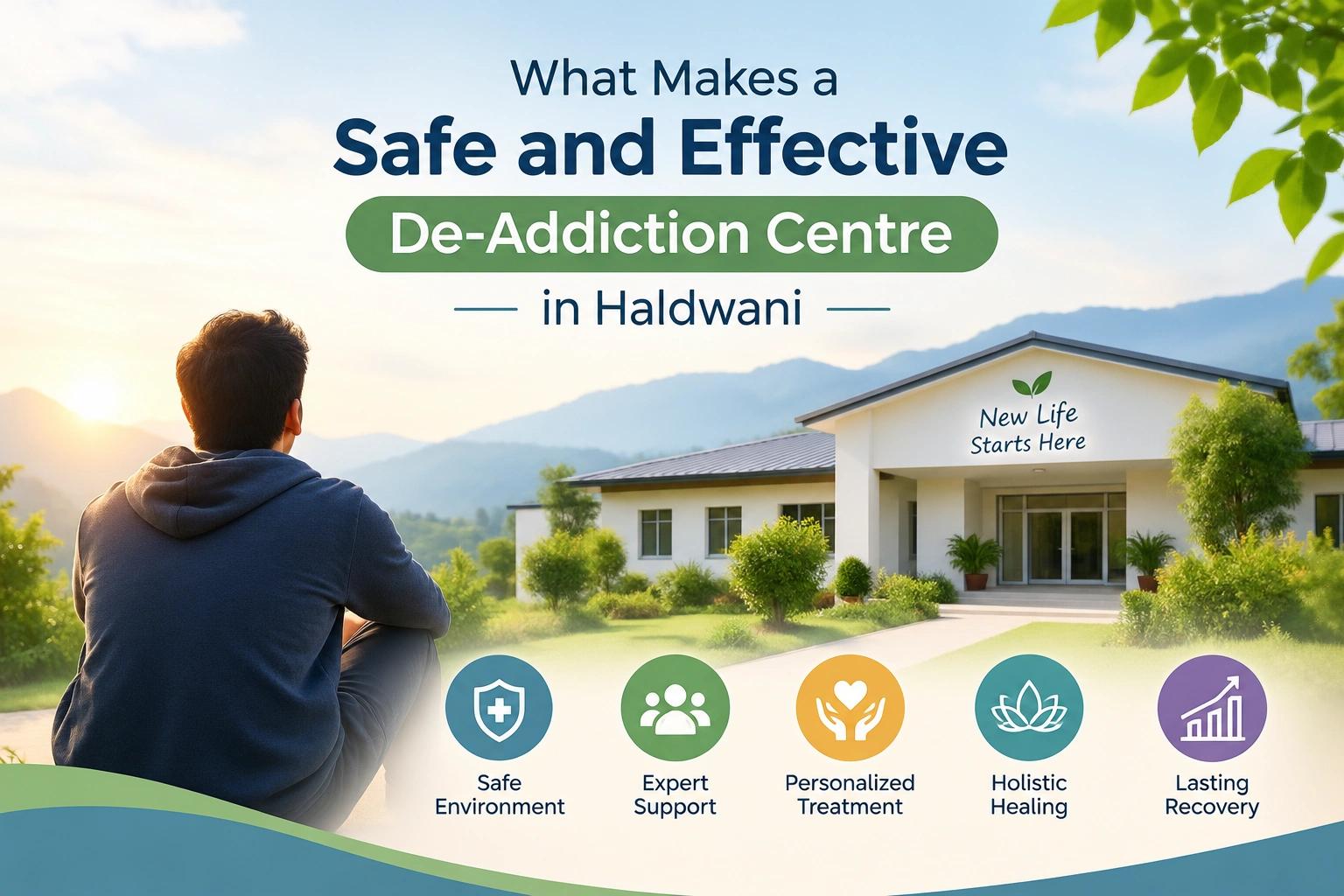
    Choosing a de-addiction centre is one of the most important decisions a family will ever make. With so many rehabilitation centers now operating across Uttarakhand, it can be difficult to tell which ones genuinely deliver safe, evidence-based care — and which merely promise quick fixes. Understanding what separates a trustworthy facility from an inadequate one can help families across Haldwani Uttarakhand and the wider Kumaon region make an informed, life-changing choice.

    Licensed, Medically Supervised Care

    The foundation of any safe treatment centre is proper licensing and qualified medical oversight. A genuine de-addiction facility should be registered with the relevant state health authorities and staffed by doctors, psychiatrists, and nurses trained specifically in addiction medicine. Detox — the process of safely clearing substances from the body — carries real medical risk if unsupervised, particularly for alcohol and certain sedative dependencies, where withdrawal can trigger seizures or other complications. A safe centre monitors patients around the clock during this phase, with a physician available to manage complications as they arise.

    Evidence-Based Treatment, Not Just Willpower

    Research consistently shows that the most effective treatment centers rely on therapies proven through clinical study rather than untested methods or moral pressure. This includes individual counseling, Cognitive Behavioral Therapy (CBT), Motivational Interviewing, and group therapy — approaches that help patients understand the roots of their addiction and build practical coping skills. Facilities with trained, credentialed counselors are more likely to consistently apply these evidence-based practices, which translates directly into better long-term outcomes for patients.

    A Multidisciplinary, Whole-Person Approach

    Addiction rarely exists in isolation. Many patients also struggle with anxiety, depression, or other health conditions that need to be identified and treated alongside the addiction itself. A high-quality centre conducts a thorough assessment at intake — screening for co-occurring mental health conditions and underlying physical health issues — so that treatment addresses the whole person, not just the substance use. This is why the strongest programs bring together doctors, psychiatrists, counselors, and nutritionists as a coordinated team, rather than treating addiction as a single, isolated problem.

    Structured Environment and Family Involvement

    Safety also depends on the physical and emotional environment. Patients need a clean, calm, and secure setting, with clear daily structure — therapy sessions, physical activity, and rest — that supports healing rather than idle time that invites relapse. Family involvement is equally critical in the Indian context, where recovery is rarely an individual journey. Centres that actively educate and counsel family members, rather than treating them as outsiders to the process, help rebuild the trust and support systems patients will lean on after they return home.

    Aftercare That Prevents Relapse

    Perhaps the most overlooked factor is what happens after a patient completes the primary program. Addiction relapse rates are comparable to those of other chronic conditions like hypertension or diabetes, which means recovery is an ongoing process, not a one-time event. Centres with structured aftercare — follow-up counseling, relapse-prevention planning, and continued family support — significantly improve a patient’s chances of maintaining long-term sobriety.

    Hamara Sankalp’s Commitment in Haldwani

    At Hamara Sankalp Nasha Mukti Kendra, we bring these principles together under one roof — medically supervised detox, evidence-based counseling, yoga and holistic therapies, family involvement, and structured aftercare — for patients from Haldwani and across the Kumaon region including Almora, Ranikhet, and Pithoragarh. Choosing the right centre is a decision that shapes a family’s future; we believe it deserves nothing less than safe, professional, and compassionate care. If you are searching for a safe and effective de-addiction centre in Haldwani, reach out to Hamara Sankalp Nasha Mukti Kendra to learn more about our treatment programs.

  • Yoga & Meditation in Addiction Recovery

    Yoga & Meditation in Addiction Recovery

    How Yoga and Meditation Support Addiction Recovery in Haldwani Clinics

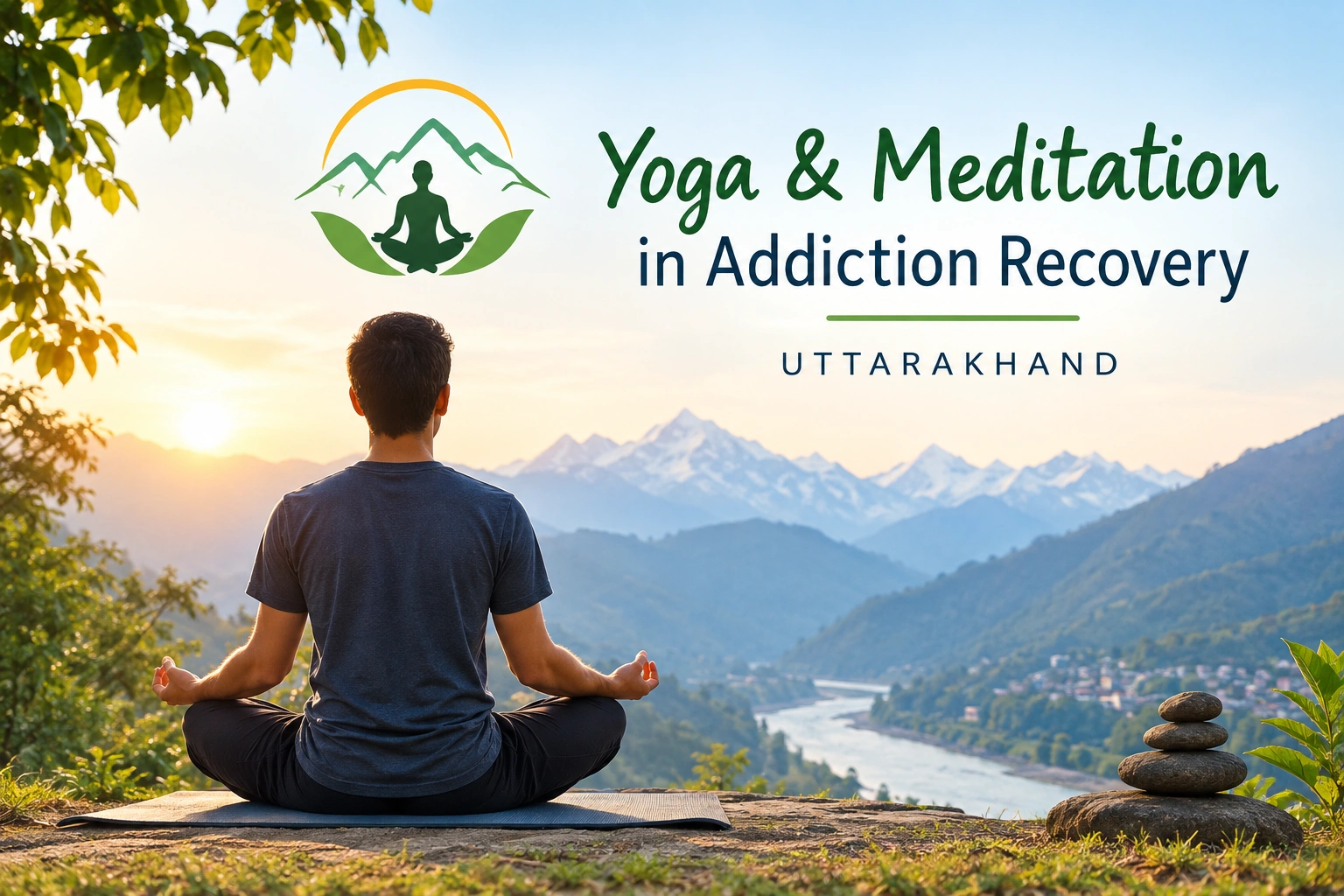
    Recovery from addiction is rarely a straight line. Alongside medical detox and counseling, the body and mind need tools to manage stress, cravings, and the emotional turbulence that often triggers relapse. This is where yoga and meditation have earned a growing place in addiction treatment — not as a replacement for clinical care, but as a powerful complement to it. At Hamara Sankalp Nasha Mukti Kendra in Haldwani, yoga and meditation are woven into the daily recovery routine, helping patients across the Kumaon region — from Almora to Ranikhet to Pithoragarh — heal more holistically.

    The Science Behind the Practice

    Addiction reshapes the brain’s reward and stress-response systems, leaving patients more vulnerable to anxiety, depressive symptoms, and intense cravings — especially in early recovery. Researchers have found that yoga helps regulate the body’s stress hormones, easing the heightened blood pressure, rapid heart rate, and tension that often accompany withdrawal. Some studies point to yoga’s effect on GABA, a neurotransmitter that calms the nervous system, which may explain why regular practice reduces anxiety during detox. Meditation works on a related but distinct level. A review covering multiple meditation techniques found meaningful relief from depressive symptoms among participants, and researchers have noted that mindfulness-based approaches — developed over more than three decades of study — improve sleep quality, reduce chronic stress, and support emotional regulation. One clinical comparison of alcohol-dependent patients found that those who combined standard treatment with yoga reduced their alcohol consumption more than those receiving standard treatment alone, suggesting a genuine synergistic effect rather than just a feel-good add-on. Breathwork-based practices, including structured techniques rooted in yogic breathing, have also shown promise in reducing cravings and withdrawal symptoms, particularly for those recovering from substance dependence, by calming the stress response that so often precedes relapse.

    Why It Matters for Relapse Prevention

    Cravings and emotional triggers are closely tied to the body’s stress response. When a patient can recognize rising tension and has a practiced way to calm it — through breath control, a grounding posture, or a few minutes of focused meditation — they gain a concrete tool for the moment a craving strikes. Over time, this builds resilience: patients become better at riding out difficult emotions instead of reaching for a substance to numb them. Yoga also rebuilds something addiction often erodes — a sense of connection to one’s own body and inner discipline. The combination of movement, breath, and stillness gives patients a structured, screen-free routine that restores a sense of control over their day, which is often deeply healing after the chaos addiction can bring to family and work life.

    How Hamara Sankalp Integrates Yoga and Meditation

    At our Haldwani center, yoga and meditation sessions are built into the daily schedule alongside individual counseling, group therapy, and family involvement programs. Guided by trained instructors, sessions are adapted to each patient’s physical condition and stage of recovery — gentle breathing and stretching in early detox, moving toward more structured asana practice as strength and stability return. For families across the Kumaon hills searching for a Nasha Mukti Kendra that treats recovery as more than just detox, this integrated approach — medical care paired with yoga, meditation, and community support — reflects Hamara Sankalp’s belief that lasting sobriety is built on healing the whole person: body, mind, and spirit. If you or a loved one is seeking addiction treatment in Haldwani or the wider Kumaon region, reach out to Hamara Sankalp Nasha Mukti Kendra to learn more about our holistic recovery programs. Content

  • Exploring the Twelve-Step Treatment Model at a De-Addiction Center Uttarakhand

    Exploring the Twelve-Step Treatment Model at a De-Addiction Center Uttarakhand

    Exploring the Twelve-Step Treatment Model at a De-Addiction Center Uttarakhand

    Recovery from addiction is never as simple as a straight path – there’s no formula that works for everyone. But among the many philosophies that are used to treat substance use disorders today, the twelve-step approach is perhaps one of the most well-established and widely accepted. Developed by Alcoholics Anonymous in the 1930s, the same basic model has been applied to virtually any kind of drug or alcohol addiction treatment ever since, and is still the foundation of the most established recovery programs.

    What Is the Twelve-step Model?

    The twelve-step model is a combination of spiritual and psychological steps that work toward individual accountability and ultimate behavioral changes. It involves every aspect of overcoming addiction: first surrendering to your addiction and submitting yourself to a spiritual higher power, and then seeking help from others in a community of support, and taking personal responsibility for the specific ways that you hurt yourself and others. It involves restoring a sense of purpose and normalcy in people’s lives, in small, incremental ways that don’t happen overnight. Unlike some medical treatment plans that may focus only on one aspect of addiction – typically the physical addiction to a substance – this process addresses the emotional, mental, and relational changes that occur as part of many substance use disorders. That’s part of why it remains a go-to strategy even today.

    Why a Peer Group Is Essential

    One of the primary tools used in the twelve-step approach is the peer group. Sitting in the same room with others who’ve been there before, who have firsthand experience with addiction as well as sobriety, can be life-changing. Peer stories are the most effective way to combat the shame that so often accompanies addiction, and hearing from those who’ve walked a similar path can be the greatest motivator to find your way back to sobriety. This element of accountability also helps you maintain sobriety long after you’ve left a de-addiction center. Many people find success with short-term treatment options, but relapse can happen within just a few short months. That’s why the ongoing accountability of a peer group is essential for long-term recovery.

    Walking the Steps

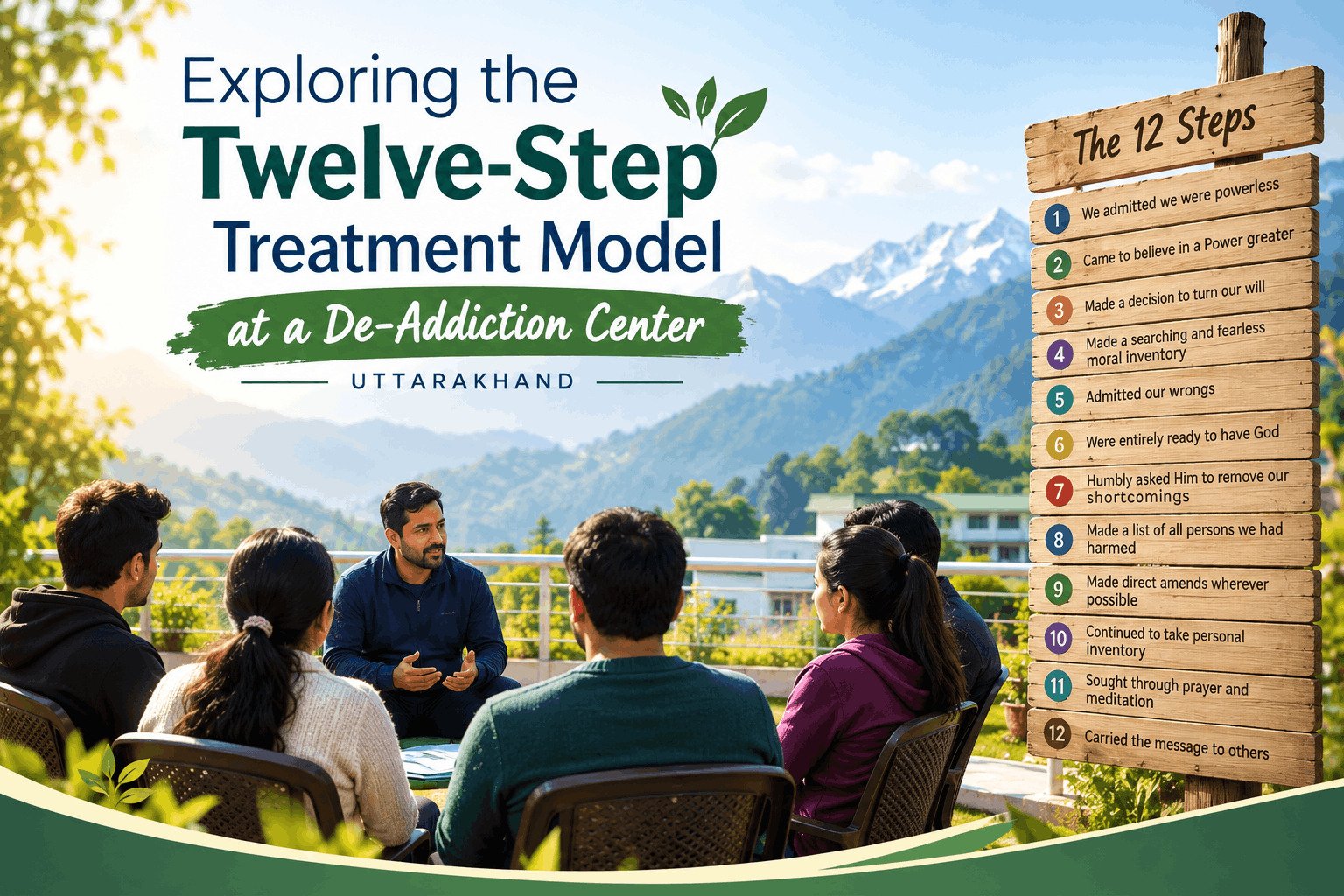
    The twelve steps can be broken into several stages. The first few are about acceptance: recognizing the addiction and realizing how destructive it has been. The middle steps are about self-awareness: knowing your personality, personality flaws, and character defects, and how they negatively affect your loved ones and other people in your life. The later steps then shift to focus on making reparation, when needed, and developing resilience through service to others. These stages resonate with what most clinicians see in those with long-term, successful recovery: people can’t get sober just by addressing their surface-level behaviors, but instead have to work through the underlying layers that feed addictive behavior.

    How This Model Integrates With Other Treatment:

    Today, the twelve-step model is used alongside other treatments. Medical interventions – detoxification, medication management, and other clinical options – are often combined with individual counseling and family therapy. In some cases, you may also be taught cognitive-behavioral therapy skills, as well. These combined services make the most sense because there is never a single trigger or treatment for addiction – whether physiological or emotional – but rather a combination that requires combined care

    A Lifelong Path, Not a Race to the Finish:

    Maybe the most important concept that the twelve-step approach imparts is that recovery is never final. Instead, it’s a lifetime process. Patients are never “done,” and never arrive at a place where they can check themselves into class and be completed cured. Instead, the goal is to remain humble and reflective, while having meaningful relationships with other people on the same journey. That growth transforms one’s life, making long-term sobriety possible. This community-rooted, step-driven philosophy is what many individuals and families rely on to guide them toward a better future.

  • The Hidden Link Between Trauma and Addiction: How Childhood Experiences Shape Adult Substance Use

    The Hidden Link Between Trauma and Addiction: How Childhood Experiences Shape Adult Substance Use

    The Importance of counseling in achieving long term addiction recovery in Haldwani

    Recovering from an addiction is rarely a clean and predictable journey. Detox can purify the body from a substance, yet deeper work – rebuilding one’s life – only comes after that, serving as counseling which acts as the cornerstone of permanent life change. For every individual living in Haldwani and Kumaon, a seasoned counselor is not merely an optional extra for recovery, but is a central aspect for achieving recovery throughout the months and subsequent years that ensue, instead of merely weeks.

    Why detoxification is simply not enough

    The physiological dependence is dealt with during detox, yet the mental patterns of thinking, emotional responses, as well as behaviors were acquired during years-the probability of having a relapse still remains high even after physical stability is achieved. It is counseling, precisely at that moment when counseling begins to shed light onto the triggers, stresses, and emotional scars that originally fueled their substance use.

    Building self-awareness and coping skills

    Individual counseling sessions offer individuals the liberty of having their own private, no-judgment space wherein one may review what led them towards their condition-one would learn to spot familiarities-be they harmful relationship, unaddressed traumas, ongoing stress, or treatable mental health disorders which often underlies their dependence for drugs or liquor. By way of well-structured approaches such as cognitive behavioral therapy, an individual may overcome old thinking patterns by substituting old ones with healthy ones. From automatic actions to well-considered responses: that transformation can separate two weeks of being sober from an entire lifestyle of recovery.

    Counseling in groups and its impact on community support

    Furthermore to one on one therapy, group counseling forms an equally vital support role, wherein shared feelings from people with similar challenges alleviate loneliness and Shame. Having that similar understanding in smaller areas, just as Kumaon, helps one to restore any lost group support. Witnessing another person combat craving, set-backs, and ordinary hurdles typically forms concrete steps towards recuperation.

    Family Counseling, which helps people at the core of their family

    Since drugs and Alcohol addiction negatively impacts all individuals within a household, help that is given individually could possibly fail people within close relationship; family counseling will help to provide understanding with loved ones toward accepting the illness rather than having self-guilt, to rebuilding faith among each other with damaged relationships and to provide those in close support the means needed toward assisting with recovery, as oppose to enabling old ways: for all families inside Haldwani, with common extended housing, this mutual healing will be the determining feature of an eventual safe and supportive house as oppose to an atmosphere which contributes toward recidivism of those in close community.

    Prevention of the cycle of relapses through counseling as ongoing support

    Recovery and abstinence does not necessarily begin or stop the minute one leaves the program, asongoing therapythrough periodical check-ins with oneself, group meeting or even continued care within sessions might lead to an earlier discovery of recurring relapses of one’s behaviors-counseling can further support each person developing ways to fight craving, to avoid certain risky circumstances unique to residing in Kumaon, and to having explicit steps one could take.

    Conclusion

    In Hamara Sankalp Nasha Mukti Kendra, counseling is approached with the perspective of an eternal process supporting recovery instead of one portion in treatment, hence, while it focuses on psychology in addition to relation issues along with social elements within drug or alcohol addictions, those will build the essential resources to achieve everlasting abstinence.