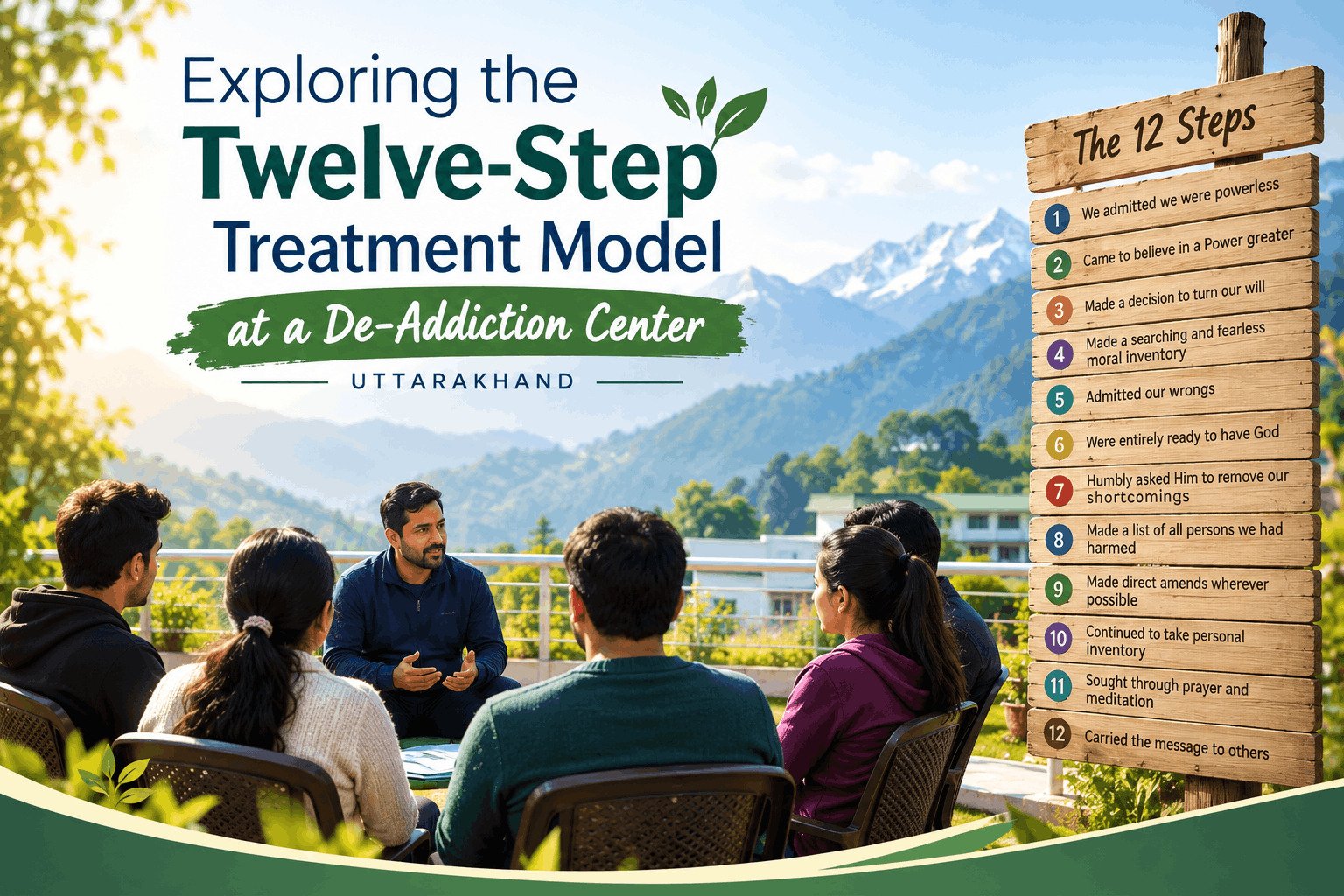
Exploring the Twelve-Step Treatment Model at a De-Addiction Center Uttarakhand
Recovery from addiction is never as simple as a straight path – there’s no formula that works for everyone. But among the many philosophies that are used to treat substance use disorders today, the twelve-step approach is perhaps one of the most well-established and widely accepted. Developed by Alcoholics Anonymous in the 1930s, the same basic model has been applied to virtually any kind of drug or alcohol addiction treatment ever since, and is still the foundation of the most established recovery programs.
What Is the Twelve-step Model?
The twelve-step model is a combination of spiritual and psychological steps that work toward individual accountability and ultimate behavioral changes. It involves every aspect of overcoming addiction: first surrendering to your addiction and submitting yourself to a spiritual higher power, and then seeking help from others in a community of support, and taking personal responsibility for the specific ways that you hurt yourself and others. It involves restoring a sense of purpose and normalcy in people’s lives, in small, incremental ways that don’t happen overnight.
Unlike some medical treatment plans that may focus only on one aspect of addiction – typically the physical addiction to a substance – this process addresses the emotional, mental, and relational changes that occur as part of many substance use disorders. That’s part of why it remains a go-to strategy even today.
Why a Peer Group Is Essential
One of the primary tools used in the twelve-step approach is the peer group. Sitting in the same room with others who’ve been there before, who have firsthand experience with addiction as well as sobriety, can be life-changing. Peer stories are the most effective way to combat the shame that so often accompanies addiction, and hearing from those who’ve walked a similar path can be the greatest motivator to find your way back to sobriety.
This element of accountability also helps you maintain sobriety long after you’ve left a de-addiction center. Many people find success with short-term treatment options, but relapse can happen within just a few short months. That’s why the ongoing accountability of a peer group is essential for long-term recovery.
Walking the Steps
The twelve steps can be broken into several stages. The first few are about acceptance: recognizing the addiction and realizing how destructive it has been. The middle steps are about self-awareness: knowing your personality, personality flaws, and character defects, and how they negatively affect your loved ones and other people in your life.
The later steps then shift to focus on making reparation, when needed, and developing resilience through service to others.
These stages resonate with what most clinicians see in those with long-term, successful recovery: people can’t get sober just by addressing their surface-level behaviors, but instead have to work through the underlying layers that feed addictive behavior.
How This Model Integrates With Other Treatment:
Today, the twelve-step model is used alongside other treatments. Medical interventions – detoxification, medication management, and other clinical options – are often combined with individual counseling and family therapy. In some cases, you may also be taught cognitive-behavioral therapy skills, as well. These combined services make the most sense because there is never a single trigger or treatment for addiction – whether physiological or emotional – but rather a combination that requires combined care
A Lifelong Path, Not a Race to the Finish:
Maybe the most important concept that the twelve-step approach imparts is that recovery is never final. Instead, it’s a lifetime process. Patients are never “done,” and never arrive at a place where they can check themselves into class and be completed cured.
Instead, the goal is to remain humble and reflective, while having meaningful relationships with other people on the same journey.
That growth transforms one’s life, making long-term sobriety possible. This community-rooted, step-driven philosophy is what many individuals and families rely on to guide them toward a better future.




प्रातिक्रिया दे