लेखक: hamara sankalp
-

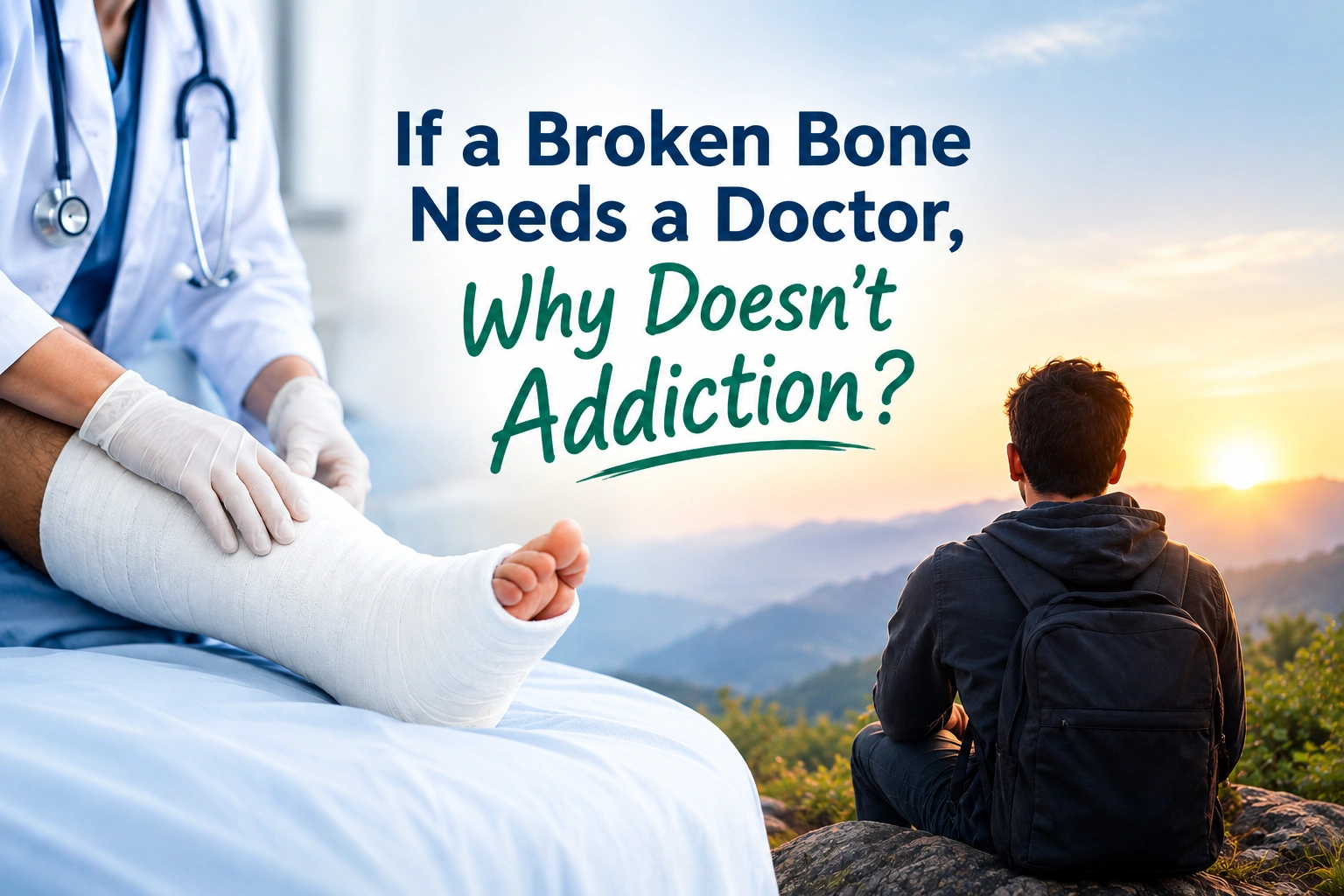
If a Broken Bone Needs a Doctor, Why Doesn’t Addiction?
If a Broken Bone Needs a Doctor, Why Doesn’t Addiction?
No one is told to “just be strong” and get back up and start walking after they’ve broken a bone; they are rushed to a doctor, have their bone X-rayed, casted up and are cared for until they heal. No one questions if they need professional help; this is seen as a given. It is the opposite with addiction; instead of a doctor they get advise, instead of treatment they get lectured on the importance of having more will power, and instead of an illness they get called weak.
The Strange double standard we often fail to mention
Contrast the different treatments between physical illnesses and addiction. Diabetes and other physical ailments, where individuals don’t always have control over them, lead to specialists to take treatment on instead of telling people to try and exert their will power more to be able to reduce levels etc. Similarly patients with heart conditions and other serious diseases don’t have to fix their problems solely through use of determination. Families try their best through love or necessity to suggest such advice; “be strong for me”, “have more will power and try to quit”, or just generally criticize; not understanding that addiction isn’t really a choice but an actual physical sickness causing changes in your brain’s response to different stresses and impulses which have to be repaired physically first to allow you to recover mentally, like any broken limb or other illness requiring the ability to move it freely again.
Why this misunderstanding is more detrimental than helpful
By simply telling a drug-dependent person to be mentally strong it compounds guilt for feeling miserable for doing things like using drugs for comfort, saying that he is weak instead of looking to an explanation of why things have become this way – addiction requires expert medical and therapeutic help to overcome, it can’t and won’t be helped solely by the victim and the best intentions and motivations. The reason for the difference in behavior between family members caring for a drug-dependant or family members caring for a drug victim, where if the later suffers a sickness such as diabetes or other issues we wouldn’t hesitate to provide professional treatment from doctors and psychologists along with our support. Addiction itself requires what any similar illness require; careful evaluation and treatment, professional assistance to combat withdrawal sickness which in its own way is life threatening (to the patients own body), psychological and mental therapy to tackle the reasons why the patient began to depend on drugs, and psychiatric aid, for it often goes hand in hand with mental illnesses such as depression and anxiety which lead to problems like drug dependence to alleviate the distress from these illnesses and much more; none of which can be achieved through a positive quote or good advice which a patient is often receiving instead of treatment from friends and family;
How we should perceive things
Perhaps the one big step to improving addiction treatment begins not just with patients but with the relatives helping. Perhaps, rather than telling an addict patient to ‘be strong’, asking ‘ have they been seen and examined properly by a medically-based professional whom specializes in dealing with people on drugs’, and then providing real, functional treatment to address and combat drug dependence. As already mentioned, people who have developed addictions require professional guidance and medical, and psychiatric help and not willpower; after all just as much as the body needs a cure for a broken bone it would in this case be appropriate to help the patient heal and fix these problems they have suffered, through dedicated treatment and expert guidance; after all, addiction IS an illness of itself and it can be effectively treated, not just managed through willpower as previously suggested. At Hamara Sankalp Nasha Mukti Kendra we see all addiction as a sickness which requires proper medical, professional help and no criticism, for with the right professional hands aiding in its cure it is capable to heal itself, much like any illness, any fractured limb.
-
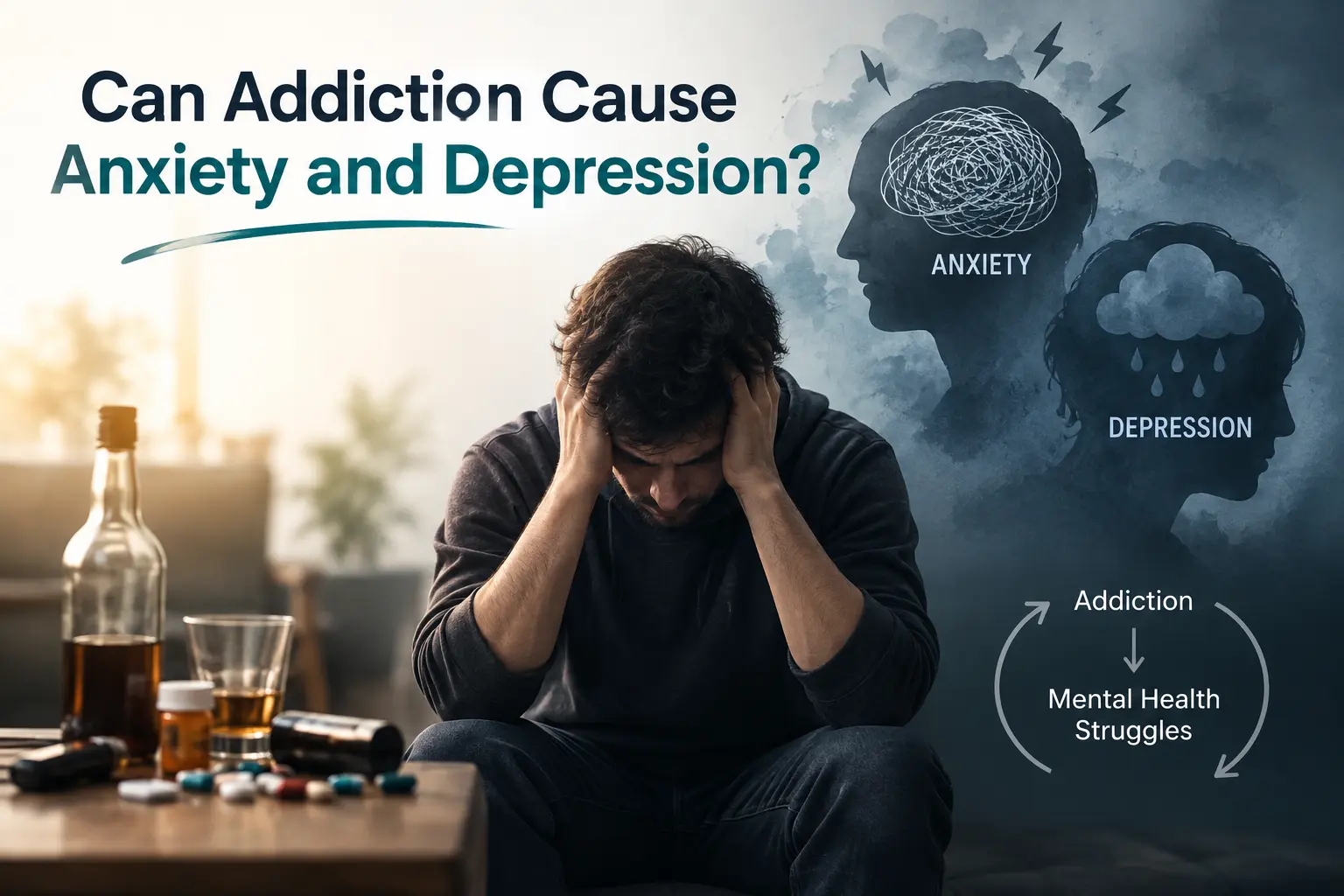
Can Addiction Cause Anxiety and Depression?
Can Addiction Cause Anxiety and Depression?
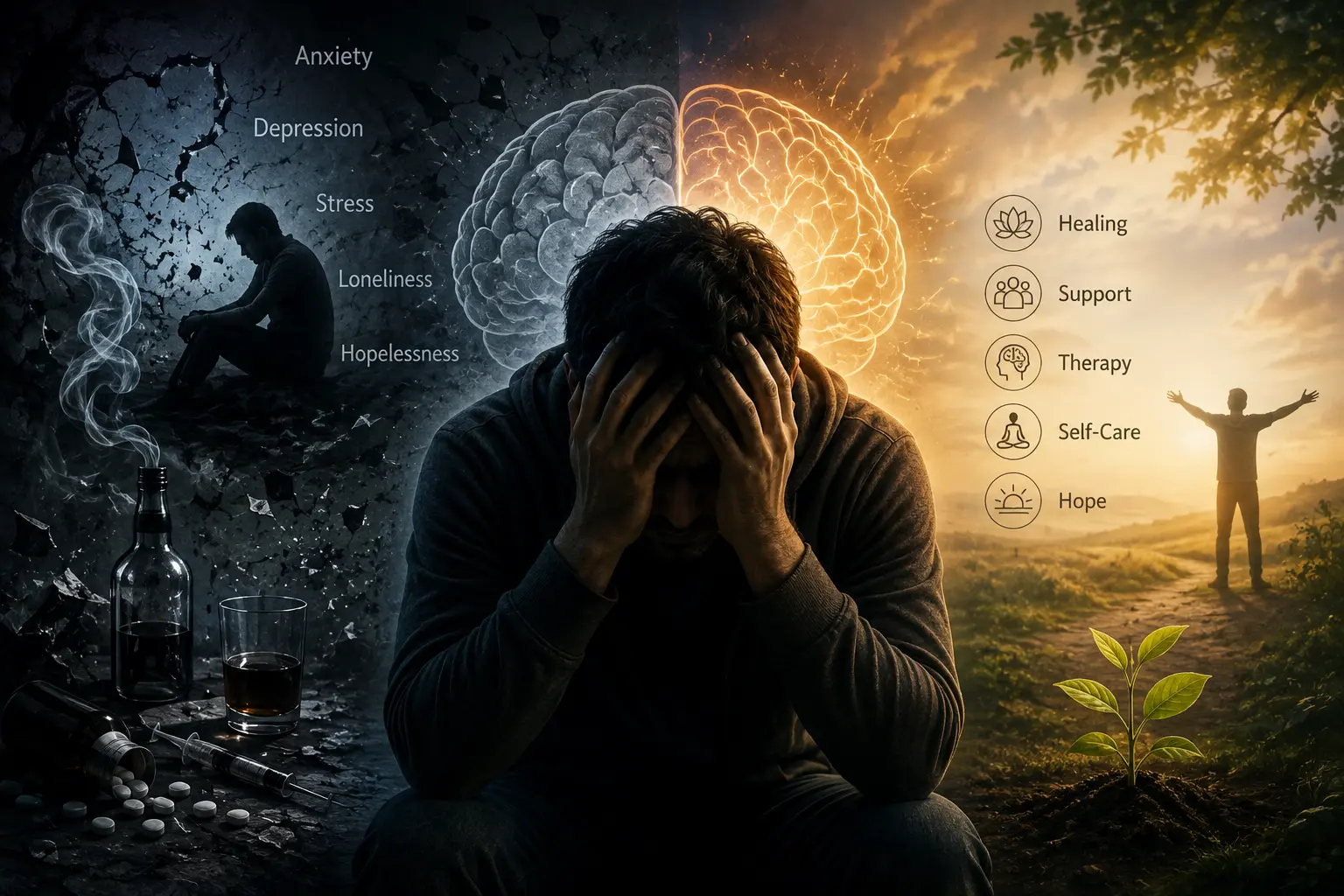
Addiction, anxiety, and depression are deeply intertwined. An impulse initially rooted in the desire to escape stress and emotional turmoil can ultimately create-or exacerbate-the very conditions it sought to avoid. Having a proper understanding of this interrelationship is of paramount importance to individuals navigating a pathway toward recovery.
The vicious cycle
For many, substances are turned to with the misguided intent of calming nerves or improving disposition. While this may seem true in the very short term, consistent usage fundamentally alters the biochemistry of the brain. This disrupts the brain’s natural process of creating essential neurotransmitters like serotonin and dopamine, which play a crucial role in maintaining emotional and mood equilibrium. Consequently, over time, reliance on the substance develops a new ‘normalcy’ for the brain. As soon as the effect of the substance wears off, a chemical imbalance invariably persists-resulting in heightened anxiety, heightened moodiness, and a pervasive sense of sadness. The substance is used to combat anxiety or depression, but addiction subsequently intensifies these very symptoms, feeding the cycle.
How addiction triggers anxiety
Substance abuse relentlessly taxes the body’s stress response system. From disturbed sleep patterns and increased pulse rates to withdrawal symptoms that closely resemble panic attacks, alcohol and drugs cause mental restlessness along with other debilitating phenomena. Regular users generally acquire generalized anxiety disorder due to the inability of the brain to function optimally without them.
How addiction induces depression
Depression almost always exists alongside addiction, as the very capacity for rewards in the brain is often eroded by substance use. Activities that have, at one point, instilled a sense of joy and accomplishment-personal feats, social interaction, or even leisure-based hobbies-now carry no emotional weight whatsoever. Damaged personal relationships, financial hardship, societal exclusion, and profound feelings of remorse or shame then further intensify depressive tendencies, making lasting recovery appear out of reach.
What Comes First?
This seems to be a rather “chicken and egg” scenario. Anxiety and/or depression sometimes precedes addiction-in this case known as self-medication. In other instances, it is addiction which leads to mental disorders, owing to its effects on brain function and individual lifestyle. In either circumstance, clinicians refer to the combination of an addiction and a mental disorder as a “dual diagnosis” or “co-occurring disorder”; the simultaneous need to treat both being of crucial significance.
The eradication of the cycle
Simply treating the addiction without addressing-either prior or subsequent-anxiety or depression in a patient rarely guarantees successful recovery. Similarly, mental disorders are seldom treated sufficiently when substance use is ignored; as such, both mental well-being and the physical dependency on substances must be treated concurrently using evidence-based practices that combine counseling, medical intervention, and long-term rehabilitation services. It is the acknowledgement of this connection between addiction and mental disorders at Hamara Sankalp Nasha Mukti Kendra in Haldwani, that shapes our rehabilitation care toward providing effective, holistic treatment for addicts from every walk of life across the Kumaon region-from Almora to Pithoragarh. From medical care, counseling, and therapy to aftercare and rehabilitation facilities, we are committed to aiding in recovery from an addicts substance use and the resultant mental anguish and despair in a complete, effective manner so as not to relapse or succumb to this perilous combination; in the spirit of true reform, it is about recovering not from dependency but also, from despair.
Conclusion
Addiction and its associated disorders namely, anxiety and depression; are deeply interlinked, and together, they constitute a vicious cycle which, if faced solely, is virtually insuperable. Recognition of this synergy marks the critical first step in seeking the most effective avenue for healing-an approach which treats the individual as a whole, not simply a victim of symptoms; thereby permitting for full recovery from the vicious cycle of substance abuse through proper assistance, an integrative treatment strategy, and an unbreakable dedication to recovery.
-
Does Home Environment Shape Addiction Risk in Childhood?
Does Home Environment Shape Addiction Risk in Childhood?
Long before anyone takes that first drink or swallows that first pill, a child’s susceptibility to addiction could have already begun-within the confines of their own childhood home. Beyond genetics and personal choice lies something incredibly powerful: environment. Growing research and years of clinical practice confirm that a child’s early home environment may subtly predetermine vulnerability.
Home-A Child’s First Model
Children observe and internalize everything they’re exposed to, not just what they’re told. Growing up in a chaotic home marked by interpersonal conflict, inconsistency or emotional neglect teaches a young person that the world is unsafe and emotions are something to be suppressed, not processed. For some of them, drugs and alcohol become that substitution of something they never learned how to achieve, for something they never learned how to withstand. Children are keen observers, and a family’s or a parent’s use of drugs or alcohol can become a silent model, “how tocope with life.
Emotional Environment Plays a Role Too
It isn’t simply whether substances are readily available in the home. Childhood poverty, a history of neglect and lack of consistent, reliable emotional support can cultivate in an individual a deep, largely unconscious, yearning to escape-a void that can be seemingly and frighteningly filled by drugs or alcohol. An environment with persistent criticism, emotional unavailability, or chaos from day to day can leave behind an imprint that will resurface in adulthood, in the form of anxiety, inadequacy or intense stress.
Predictors of Protective Childhood Environments Can Turn the Tide
The most uplifting part about this link is the truth that childhood experience isn’t fate-it is, as in all instances, the beginning or a hint at a child’s future outcomes. Children who feel they have at least one stable and supportive adult who is available to them; who were raised in homes withclear boundaries and with open communication throughout childhood) naturally are better equipped to handle stressors than others. A safe and supported home that is free from pervasive and prolonged shame can be a protective factor and keep individuals from utilizing chemicals as a way of coping.
Its Role in Recovery
This linkage isn’t about placing the blame, rather for the purpose of understanding in order to prevent the cycle from continuing. A number of patients enter de-addiction treatment bearing the scar of a childhood that remained unaddressed. It is crucial not to treat addiction without dealing with its roots (childhood), as this opens one up for lifelong struggle that might result in repeat addictions. It’s also the reason why the role of the family during the course of treatment is indispensable-not to rehash pain, but to help restore the kind of structure that encourages everlasting change. At Hamara Sankalp Nasha Mukti Kendra, we witness this consistently and this is what guides our entire treatment process — not simply dealing with the symptoms of intoxication, but understanding the root of it all to achieve an everlasting recovery.
-
addiction and mental health
How Addiction Affects Mental Health and Emotional Well-Being
It’s extremely rare that addiction is simply a physical problem like withdrawal from a certain substance or behaviour. On the outside we might be watching the physical signs and compulsions — a craving, the physical feeling of withdrawal, the inability to stop. Underneath this is something far greater: the thinking and feeling of another person, how they relate to the world around them. Understanding this link is vital if you are a sufferer or if you have someone in your life battling with it.
The Brain-Chemistry Link
All addictive substances or behaviour are working, at least partially, by exploiting the brain’s reward system. Dopamine is the neurotransmitter that generates feelings of motivation and pleasure — too high levels of dopamine is released within the brain when taking drugs or performing an addictive behaviour. As time goes on the brain will adapt to extremely high levels, reducing its own level of production of dopamine and also reduce how sensitive it is. People addicted long-term often have a very blunted/flat sense of feeling motivation and happiness, to enjoy things they used to enjoy when in a state clinicians refer to as anhedonia. This is the brain has become reconditioned to require extreme stimulation to give feel good results and ordinary life seem dull in comparison. The sufferer is NOT simply not trying hard enough to pull out of it when in this situation — it’s actually a chemically identifiable change within the brain itself.
Anxiety and Depression: Cause, Effect, or Both
It can actually work in either direction: for some, the substance is taken as a cure for underlying psychological suffering, i.e a sufferer’s depression, anxiety or trauma are ‘medicated’ by the use of it. Other people’s use leads to them feel anxious/depressed because their whole life is narrowed to scoring the substance that makes them feel alive and so causes further misery on the way. The vast majority agree that for most, BOTH forms are occurring alongside each other. This form of problem is known as “dual diagnosis” or “concurrent disorder”.
The Sufferer’s Emotional Functioning Breaks Down
It’s a lot quieter aspect of what substance use actually causes for sufferers. Most people have to tolerate discomfort, sit with negative feeling and react cautiously to stressful circumstances in healthy emotional functioning. Addiction attacks the use of a sufferers abilities and when a substance becomes the go to solution to each negative emotion experienced, it never needs the practice to evolve other responses to stress. What can be seen: High degrees of irritability Mood swings where emotion are extreme and quick to happen Inability to stand and cope with routine disappointment or irritation Periods of low mood or emotional numbness which lead to waves of emotions in large, but quick, quantities
The Damage Incurred on Social/Familial Relationships of an Addiction
Mental health can only exist with social support, addiction is devastating to it. Trust slowly breaks down when it becomes normal to make promise after promise only to break each one and when suffering feels alone due to secrecy. Self-hatred grows in the sufferers, often creating feelings of isolation which promote a need for continued addiction. Social support decreases and increases loneliness which leads more to mental health issues like addiction that it combats them
-
Alcohol Addiction Treatment
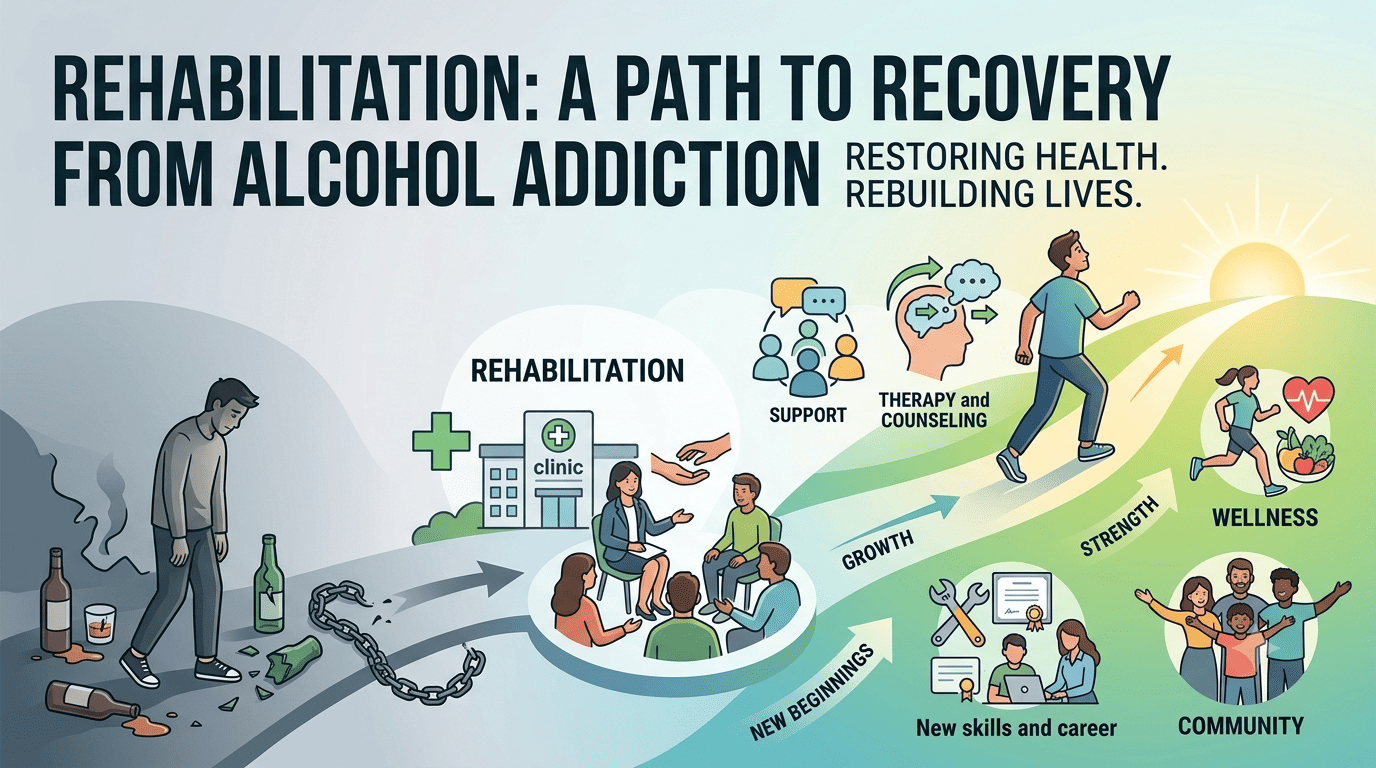
How Rehabilitation Helps People Recover from Alcohol Addiction
Alcohol-addiction-Treatment very rarely recovers on its own, willpower is not enough to stop a dependence which has altered the brain chemistry, daily pattern of life and relationships. It takes structured rehabilitation to overcome this condition by removing it from a person with a safe, supervised manner from dependency to being on recovery once again.
Addressing the Root Causes-Not Just Symptoms:
Dependence is not just on alcohol, instead it is based on stress, past trauma, depression, or emotional pains that have been neglected so far. Only by giving proper therapies of one on one and group counseling you can help the patient in identifying and understanding the root cause of it- why did the patient resort to alcohol. This practice is the primary part of treatment at Hamara Sankalp Nasha Mukti Kendra, Haldwani, which works on developing Individualized Treatment Plans.
Ordered daily life & Peer support:
The least talked about benefit of rehab is this-the structured routine that each patient is provided. Since the disorder has ruined the routine by addiction, a rigid structure involving the schedule for all therapy sessions, Physical training, prescribed meals as well as some leisure and rest ensures in bringing back discipline in the system. This not only provides a structured framework to life but also helps in social support wherein you are around other people with same similar issues. The biggest driving force for many of patients is stories shared by peers.
Involvement of Family members:
This is yet another important aspect as it does not only involve the user but also the family structure. Rehabs involve the family members of the patients so that they are well aware that addiction is a medical problem and not a stigma or a personal flaw. This prepares the entire family unit towards facilitating a smooth recovery after the patient is brought home.
Prevention of relapses & post treatment plan:
The threat of addiction does not just stop after you come out from the rehab, the risk of relapse after treatment usually occurs during the first few months of a patient’s journey after exiting the rehabilitation center; hence proper post-treatment strategies and recovery planning are equally important that includes follow up with support groups, scheduled visits and therapeutic support and not just simply saying goodbye with advice.centers which maintain post-treatment communication have high rate of recovery patients who are drug-free and in good health.
The Importance of Professional Rehabilitation:
Rehab takes care of patients by combining medical expertise with therapy, which even the healthiest body finds difficult to deal with the symptoms it may acquire from alcohol-addiction, such as tremor, seizure or other more minor Symptoms; so you should never try to recover without professional rehabilitation. Rehabilitation is not just about taking one out of the symptoms but building it back up and getting ones self right again.
-
smoking effects on life expectancy
One Cigarette Takes 11 Minutes Off Your Life — Here’s the Science
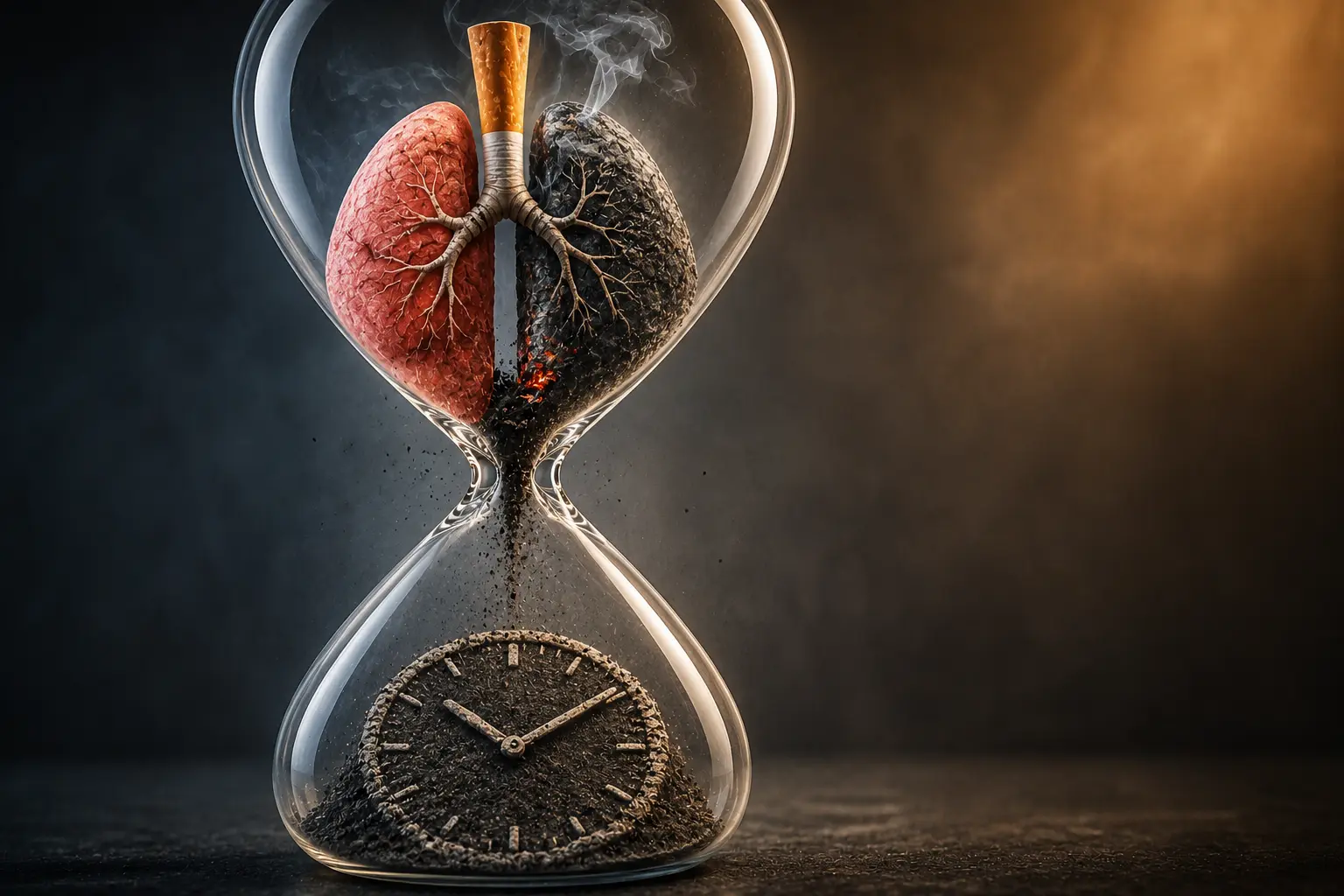
Light up a cigarette, and in the span of that slow exhale, you’ve signed away 11 minutes of your life. Sounds stark, almost too specific — but the figure is drawn from research, and a peek under the hood might be all the statistics ever lacked to be a powerful wake-up call.
What Is the Origin of the “11 Minutes” Statistic?
The estimate comes from research published in the British Medical Journal. Researchers took the total average loss of life expectancy for smokers, divided it by the average number of cigarettes smoked in their lives, and calculated a loss of about 11 minutes per cigarette. This means a pack-a-day smoker is burning through nearly 4 hours a day.
How Does One Cigarette Take so Much?
One single cigarette expels over 7,000 chemicals into your body — over 70 of which are known to be carcinogenic. Every single puff means: * Carbon monoxide is immediately binding to red blood cells, making them inefficient at transporting oxygen to your heart and brain. * Nicotine immediately increases heart rate and blood pressure for a significant duration, putting severe strain on your cardiovascular system. * Tar is coating your lungs, destroying cilia that clear the respiratory pathways, and predisposing you to everything from chronic bronchitis and COPD to lung cancer. This doesn’t happen on some distant “future date” where the damage accumulates slowly; it begins with the very first cigarette.
Damage Is Not Limited to Quantity — It Is Cumulative
Damage isn’t merely a function of today’s consumption. Over months, years, and decades, this damage becomes increasingly integrated, cell by cell, moment by moment. The teenager who lights up and feels on top of the world doesn’t realise their lungs, blood vessels, andDNA are already recording the tax, a permanent log of this self-inflicted cellular wound.
Good News: The Body Starts Repairing Immediately After Quitting
Here comes the hope — and it’s immediate. From the moment you stop, your body begins to reverse the damage. Your heart rate drops within minutes; carbon monoxide levels decrease in 12 hours, and within a year, the risk of heart disease declines rapidly. Recovery is certainly a journey, not an instant reset, but the restoration process kicks into gear far sooner than you might think.
-
Depression and Substance Abuse — Which Comes First, and Why It Matters for Treatment
Depression and Substance Abuse — Which Comes First, and Why It Matters for Treatment
Ask any family who has struggled with addiction and you’ll hear confusion. ‘ Did the drinking cause the depression, or was he depressed even before he was drinking?’ This question can be so much more than a philosophical argument-the answer to it will actually influence the treatment and the WRONG answer can mean months of ineffective therapy.
The Chicken-and-Egg Scenario
In a professional psychiatric community this combo is called “dual diagnosis.” And this is what all the studies we’ve looked at show-the directions run both ways.Depression first, then alcohol: A person with long-term, persistent sadness, hopeless-ness or emotional pain might start using substances as a way to numb them. It’s then often dubbed, “self-medication” because the substance momentarily takes the edge off. But eventually, to stay functioning, he will come to use more of it, more often.Alcohol first, then depression: Over time, an addict who has never been diagnosed with depression, can indeed develop a form of it solely because long-term, excessive substance use alters some of the brain systems that were responsible for motivation, pleasure and mood regulation. Furthermore, an addict’s depressed state can also be worsened by his or her guilt, isolation and life-implosion resulting from the addiction.Many people actually cycle back and forth between a depression and the addiction in a self-defeating cycle, where trying to address one can be incredibly complicated and ultimately, clinicians simply see both as being present realities that need to be dealt with by some combination method.Why it matters (less than you would think-and more)
While understanding whether addiction caused the depression, or whether existing depression induced the use of substances, can add important context about a particular person’s circumstances, they don’t seem to impact the “correct” treatment plan in modern rehabilitation. Both are present; one is not “in charge” and “responsible” for the other in ways we should be working toward correcting. Indeed, historically treatment programs have tended to work sequentially-solving the addiction, then treating the mental illness (or vice-verse.) It appears we’re over this approach; after all, the depression is not “after” the addiction or vice versa. The two are integrated and are affecting the person, and often their relationships, simultaneously.
Why Integrated TreatmentWorks Better
Instead, today rehabilitation focuses on using the integrated treatment approach where the patient is prescribed medical detox for physical dependence, therapy to assist recovery of behavior pattern, psychiatry or therapy to address co-occurring mental health issues or use of prescribed drugs to alleviate depression, and involvement with the family to try and rebuild a stronger, less isolated support system. Treating only one aspect will eventually put that original problem back to the forefront again in a vicious circle: when one illness is finally resolved, the original illness comes back again, often more aggressive than ever. If depression is untreated, it makes recovering from addiction more difficult because the depression is still undermining an individual’s motivation and outlook.
What Families need to be Aware Of
For an afflicted member that you care about who uses substances, look for indications of depression as well. This may take the form of their withdrawal from loved ones, and their friends, a consistent low mood even if they are momentarily feeling better emotionally from a high. Also be aware of lost interest in everyday things and hopeless states regarding the future. When approaching rehab, be open about sharing information like this when your family member is first assessed.
Hamara Sankalp’s Approach to Dual Diagnosis
Since its founding at Hamara Sankalp Nasha Mukti Kendra in Haldwani, Hamara Sankalp has acknowledged that the vast majority of people entering rehabilitation are dealing with dual diagnosis. Their treatment plans focus on assessing and addressing any co-occurring mental illness, such as a form of depression, alongside physical addiction. According to Hamara Sankalp staff, “asting sobriety is not just about stopping the use of a mind- altering substance; it requires treating both the addiction and the mental and emotional factors underlying it, simultaneously.” If you want to assist a loved one who could potentially be experiencing the symptoms of both depression and addiction simultaneously, contacting Hamara Sankalp at once, or calling their helpline, 14446, may be crucial in getting them on their way to lasting recovery. This article is for informational purposes and to further understanding. If you or someone you love are experiencing challenges relating to drug and alcohol addiction as well as depression, please reach out to a mental health professional or to a national support helpline.
-
Synthetic Drugs vs Traditional Drugs — What Every Parent in Uttarakhand Should Know
Synthetic Drugs vs Traditional Drugs — What Every Parent in Uttarakhand Should Know
For years, when parents in Kumaon and, indeed, Uttarakhand, thought of drug addiction, it conjured images of ganja, opium, or liquor-addictive substances inextricably linked to local culture and topography, closely associated with old age or a certain community within a neighborhood. However, substance abuse landscape in India is shifting rapidly, and synthetic drugs are reconfiguring perceptions of it among youth today.
From Tradition to Synthesis
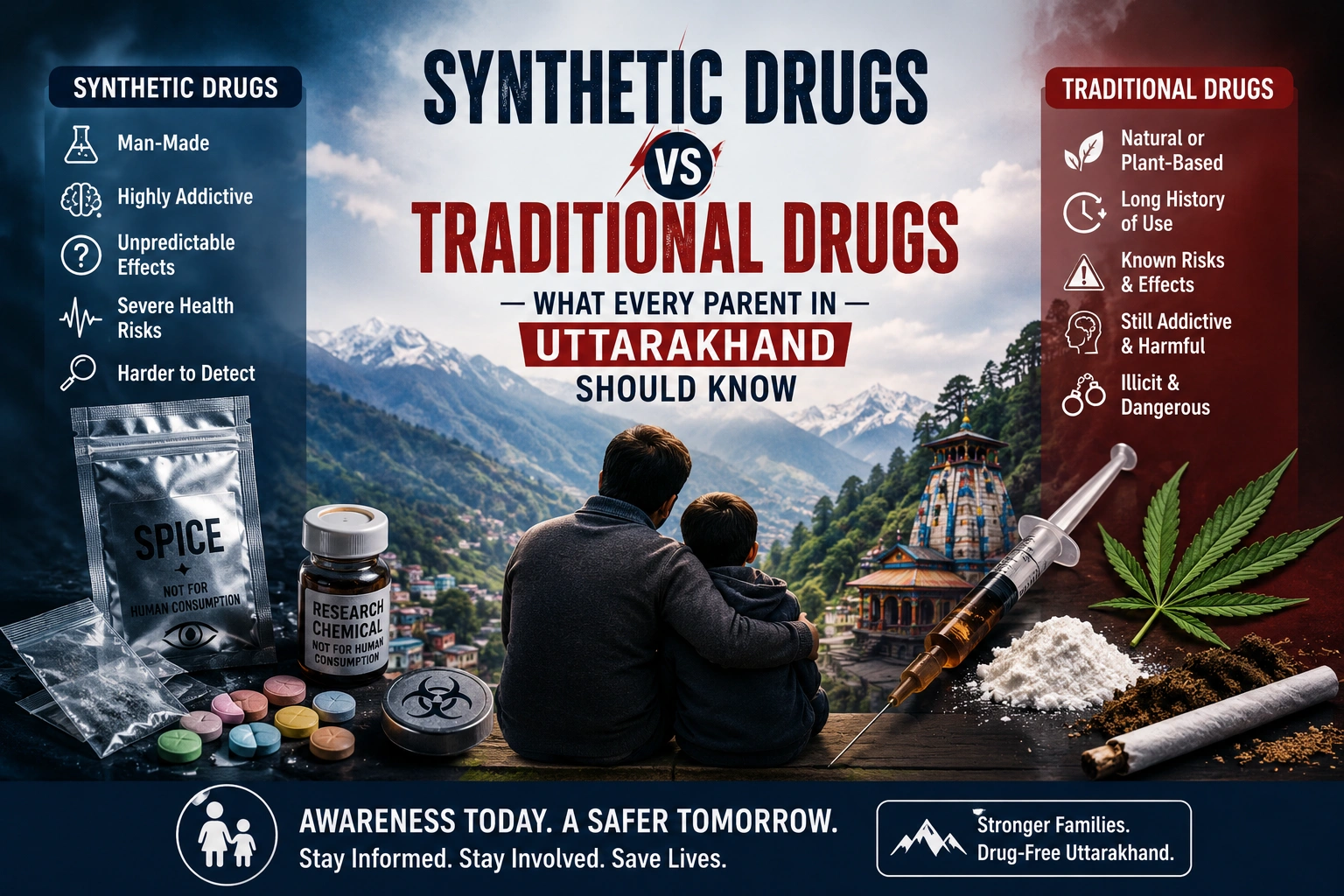
Traditional drugs like cannabis, and naturally occurring opiates, were primarily plant based and hence easier to detect, bearing the long documented history associated with Indian society. Drugs derived from chemical synthesis (mephodrone, more widely recognized as “MD” or meow meow; methamphetamine, also known as crystal; and hallucinogenics like LSD) are produced in covert labs. The trend analysis drawn from enforcement agencies for 2024-2026 shows a move decidedly in favor of the synthetic form; especially in urban and sub-urban India. However, the shift towards synthetic forms is not random-they are far more inexpensive to produce, easier to conceal, have a more intense although brief high than traditional drugs, translating into faster onset of addiction and being considerably harder to detect with old-age warning signals that many of you likely heard when growing up.
Why This Is Relevant for Uttarakhand Families
Whilst conversation on the issue largely revolves around metros and cities like Delhi NCR and Bengaluru, the truth is that no region remains isolated for long. The rise of an educational hub or a college town throughout Uttarakhand inevitably means exposure to an identical supply chain and psychosocial environment driving synthetic drug consumption at a faster pace. Student/professional emigration out of state, increased smart phone and internet penetration, increased social networking with out-of-state friends; all these factors are instrumental in bringing drug consumption of synthetic form into the remote valleys of Kumaon.
Points for Parents to Notice
Traditional substances: Their symptoms are largely more gradual and easier to perceive (lethargy, blood-shot eyes, altered sleep patterns, changed food intake, and a downward trajectory) than synthetic drugs. Synthetic substances: Counter-intuitively to addiction-they generally lead to sudden escalation of energy and an inability to sleep, later followed by a fall. This new development might easily be misconstrued as the stress of an examination period or normal teenage tantrum. So, you may find identifying this form of addiction particularly challenging.
Warning Signals You Should Be Look Out For:
Marked change in sleep patterns or suddenly exhibiting unusually bursts of energy, followed by exhaustion Sudden irritability, aggressiveness or paranoid behavior. Formation of new peer groups of a significantly different nature; who were perhaps not part of either familiar circle or college cluster. Unaccounted missing money or suspicious expenditure. Sudden loss of interest in the person’s activities or pursuits that were previously a cherished passion.
What Parents can Do to Tackle this trend
Start conversations about substance use when you believe it’s not a problem, avoid doing it at a point when it already is. Talk about the issue at length and without the judgment and suspicion you may carry. Gather information and keep yourselves abreast of newer synthetic forms that exist-recognizing how they can potentially exhibit different behavioral or symptomatic indicators than traditionally associated substances. Observe behavioral shifts more than just physical indicators, synthetic substance use is most often indicated by changes in an individual’s emotional, academic and social functioning. Avail professional guidance and intervention at an earlier stage possible for maximum recovery possibilities for synthetic drug addition as traditional addiction therapy would seldom succeed in synthetic drugs.
-
Detox vs Rehabilitation: What’s the Difference?
Detox vs Rehabilitation: What’s the Difference?
Once a person makes the decision to move forward on their recovery journey from addiction, two specific terms are often introduced: detoxification and rehabilitation. While frequently used interchangeably, these two terms are distinct points within the overall recovery process, differing in time, purpose and strategy. A clear understanding of what sets these two stages apart is critical to anyone embarking on treatment.
What is Detox?
Detoxification or Detox is the first medical step of recovery when the body has become dependent upon harmful substances (alcohol, drugs or any substance one can become dependent upon), so removing them from the system completely can become dangerous. This entire phase of withdrawal is approximately between 3 and 10 days but is dependent upon the substance and how bad the dependence has been. Within this phase, many symptoms of withdrawals like anxiety, tremors, nausea and also sleeplessness but sometimes in severe occasions even serious complications can be experienced and because of these reasons the need for medical supervision during this process is extremely vital to ensure all the withdrawing patient’s vitals are monitored; medication can be administered if needed and that withdrawal isn’t only as safe but as comfortable as possible by those expertly trained by experienced medical professionals. N.B. Detox purely means the body is no longer supplied with the substance, rather than a cure for addiction which the previous term ‘detox’ might often refer to.
What is rehabilitation?
Rehabilitation on the other hand is a more complex, longer-term therapy which follows on after detox. As part of rehab, care will be taken to address the factors which caused the dependence in the first place, such as mental health, stress, childhood trauma or family influences. Individual counseling is usually part of such a rehab program along with the following other facilities and areas, which are aimed at getting to the root of the problem: Individual counseling Group therapy Family counseling Life skills training Relapse prevention training Such treatments will usually last from weeks to months long.
What is the Actual Difference?
So in really basics: detox rehab Cleans the physical Body Repairs the mind and behavior short-term (days) long-term (weeks/months) Medical care is primary Psychological and emotional primary cares Works out withdraw symptoms Deals with underlying causes First aid The actual recuperation process There are substantial risks in starting recovery without having the detox. The physical body is constantly influenced in the substances it gets. detox and rehab act as a sequence. Detox helps calm the body and prepare it for emotional and mental work involved in rehab, which in turn converts that stability into a lifelong, successful sobriety. Hamara Sankalp Nasha Mukti Kendra in Haldwani guides you through this all-medically detoxifies them, brings structure through rehab-so you don’t need to roam about here and there. If you or a loved one needs help with addiction, rest assured, recovery can be a daunting journey, yet with the help of professionals, it becomes very much possible. And it also never is actually ample just to go over the detox phase with no proper recovery program. All of us know, the mental triggers are a enormous obstacle and it would bring about re-addiction quickly. Why One Needs Both For successful addiction recovery,